An arribada (Spanish for “arrival” or “arrival by sea”) is the name given to the incredible phenomenon when thousands of Olive Ridley turtles come onto a particular beach in Costa Rica to lay their eggs overnight. There can be up to 80,000 turtles in ONE NIGHT, and these turtles hatched on this same beach 10-15 years ago. When a hatchling emerges from its nest and crawls to the ocean, it memorises the unique magnetic signature of that specific stretch of coastline. Every place on Earth has a distinct magnetic field and the turtle stores this data as an internal map. When mature females are ready to lay eggs years later, they navigate thousands of miles across the ocean by following these magnetic gradients back to the exact place. How incredible is that!
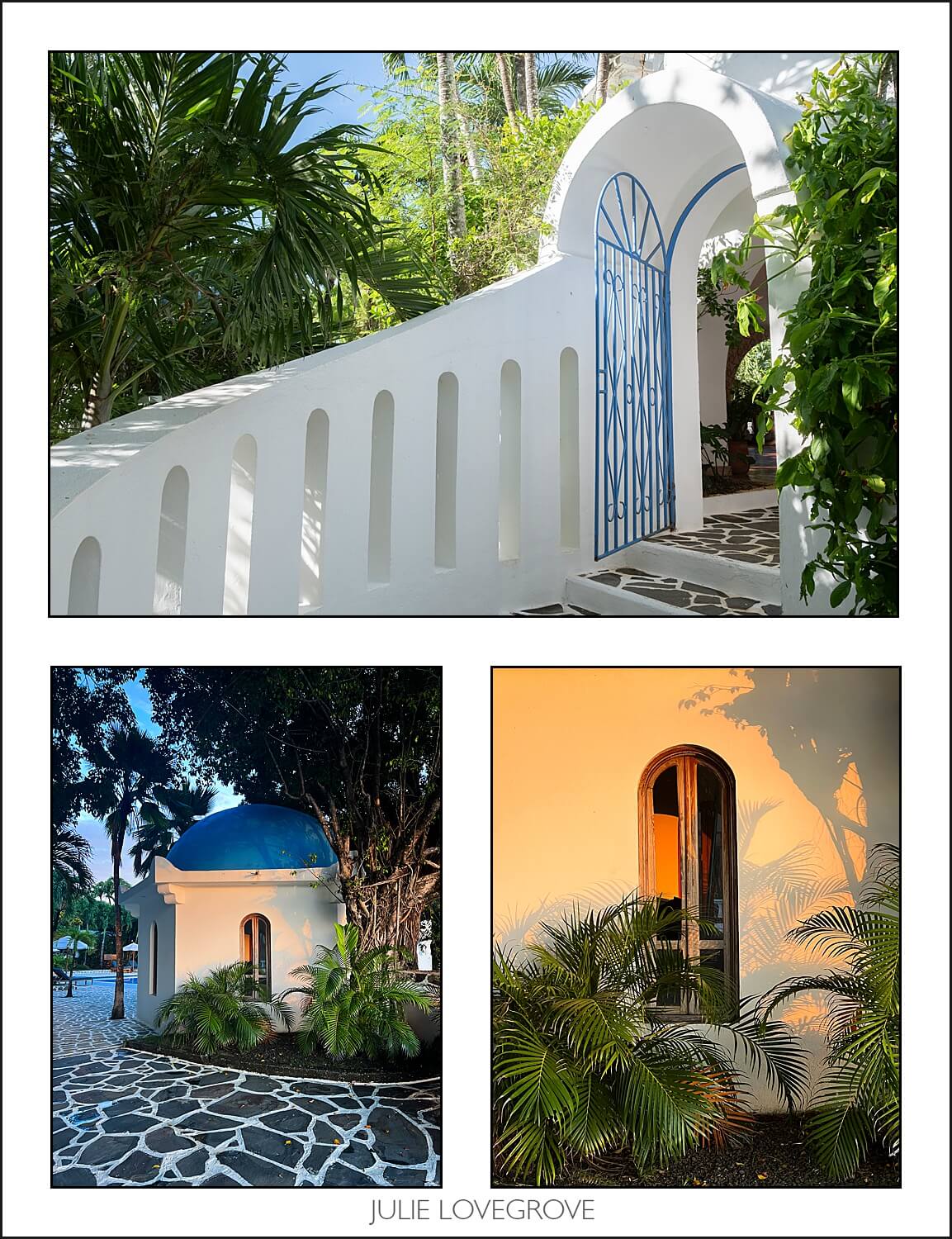
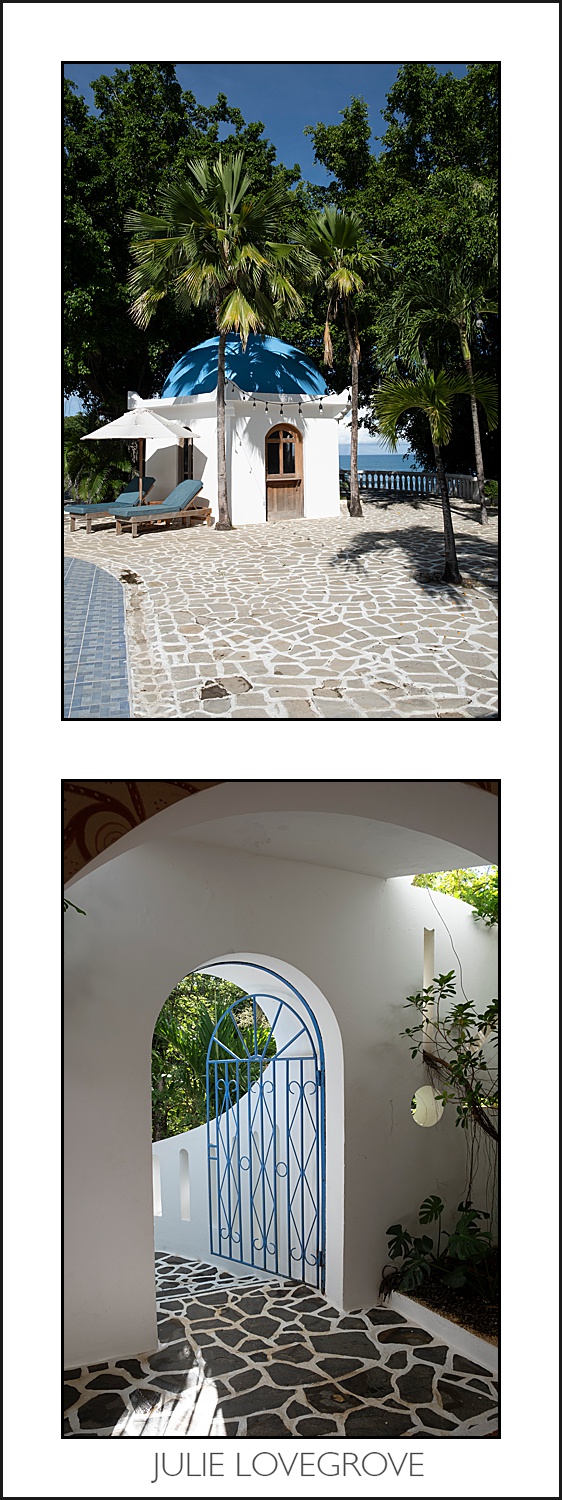
The public are only allowed on this particular beach with a guide, and a few days ago we booked onto a 5.00 a.m. slot. As the location is a couple of hours away we also booked a hotel for the night before. The owner of this particular hotel is Greek, and there are clues to this in its design.
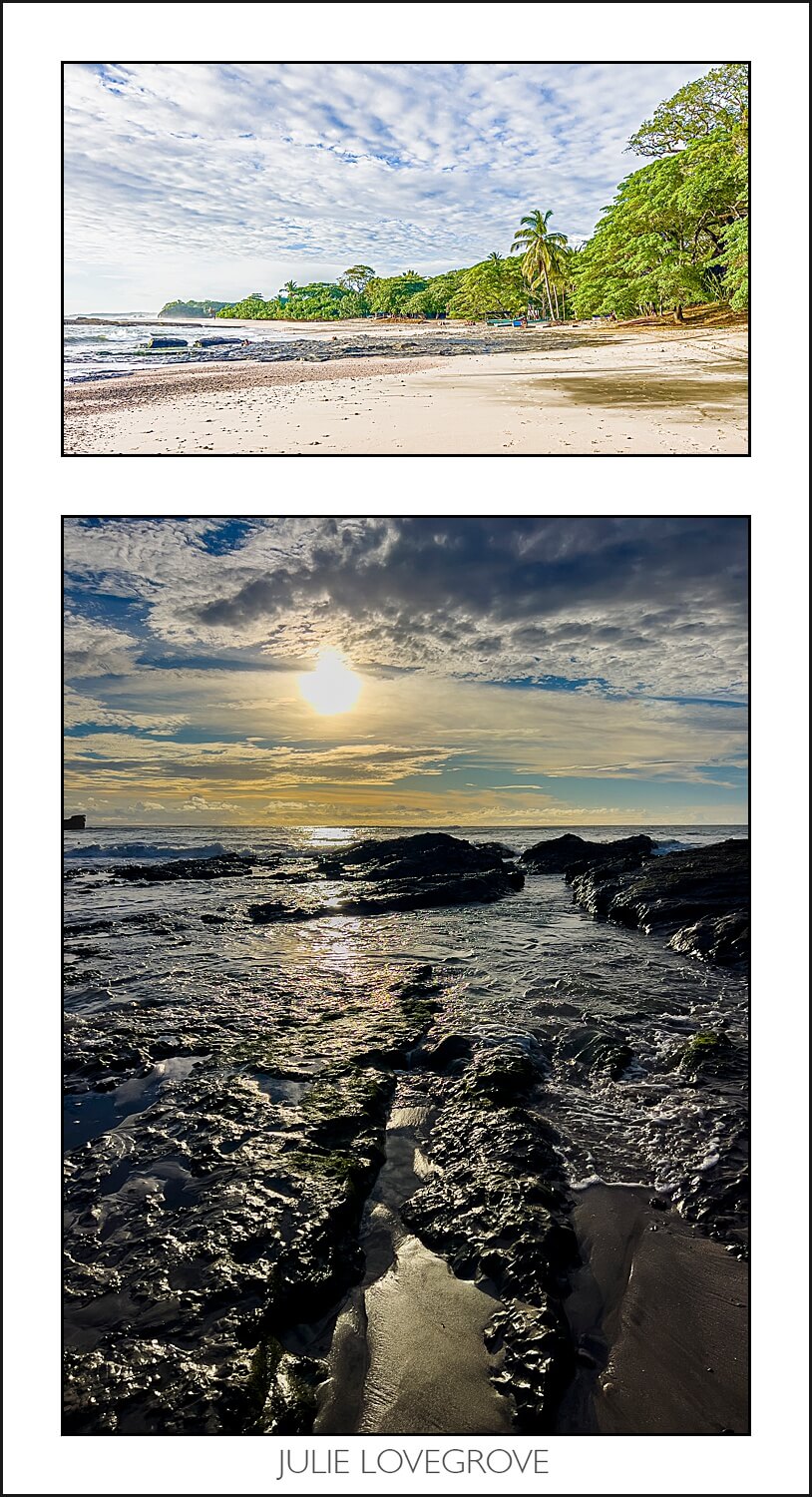
The hotel overlooked a beach and we took a walk down onto it after dinner. I really like that beaches here have trees and jungle right down to the sand, with no high-rises spoiling the look.
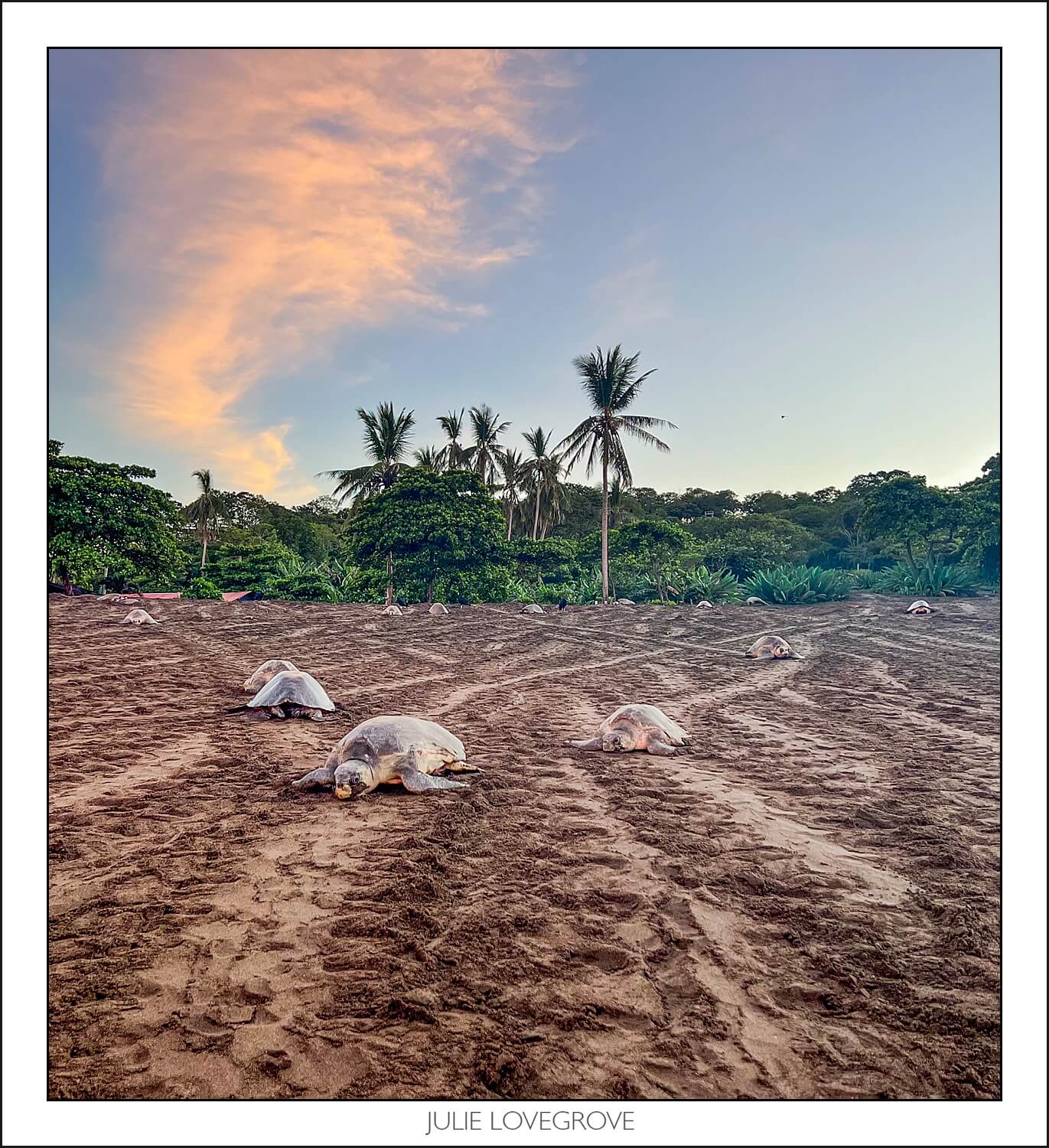
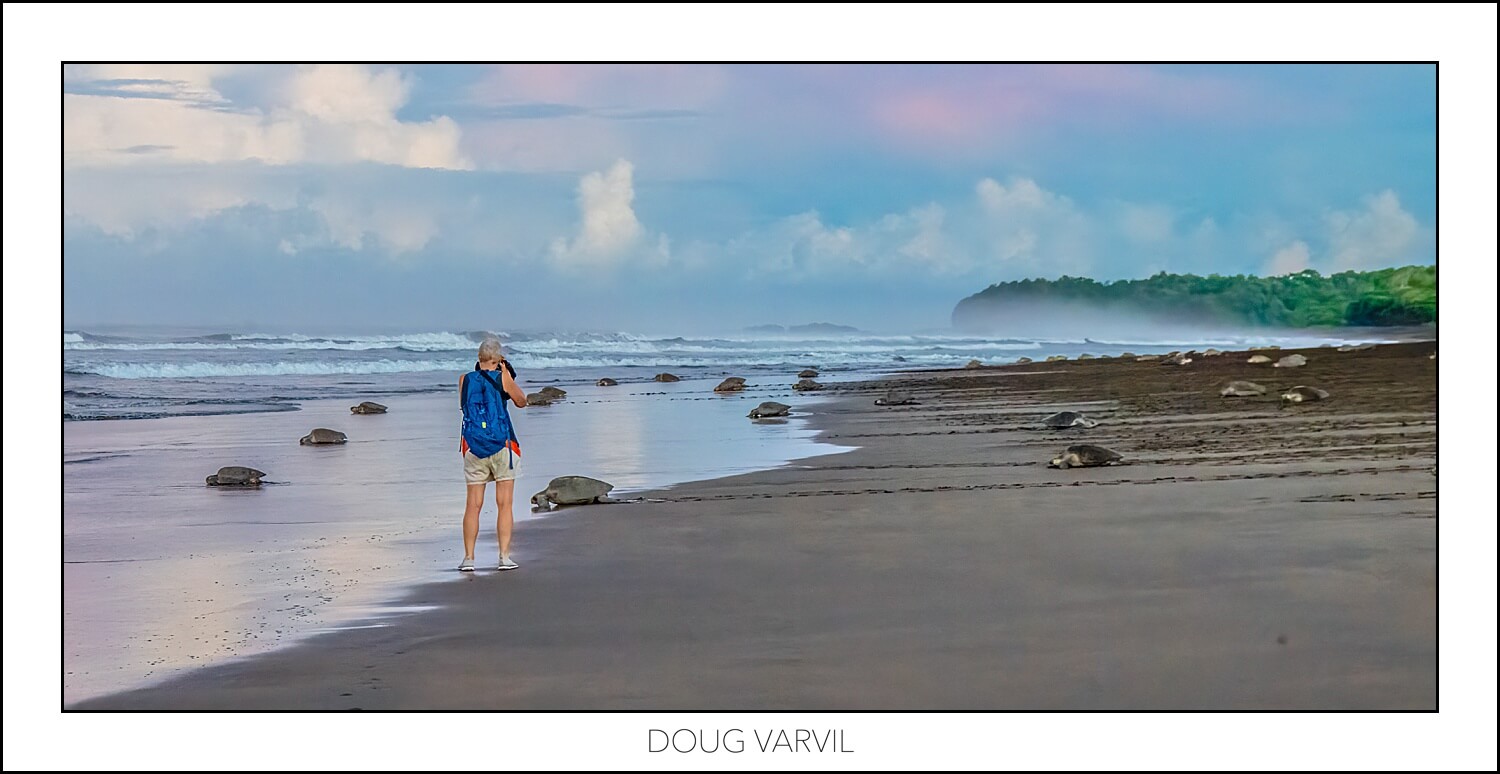
The next day we were up bright and early to drive to the National Park and to meet our guide. It was still dark when we went onto the beach and could just make out hundreds of ‘humps’. As it got lighter we were better able to see the turtles.
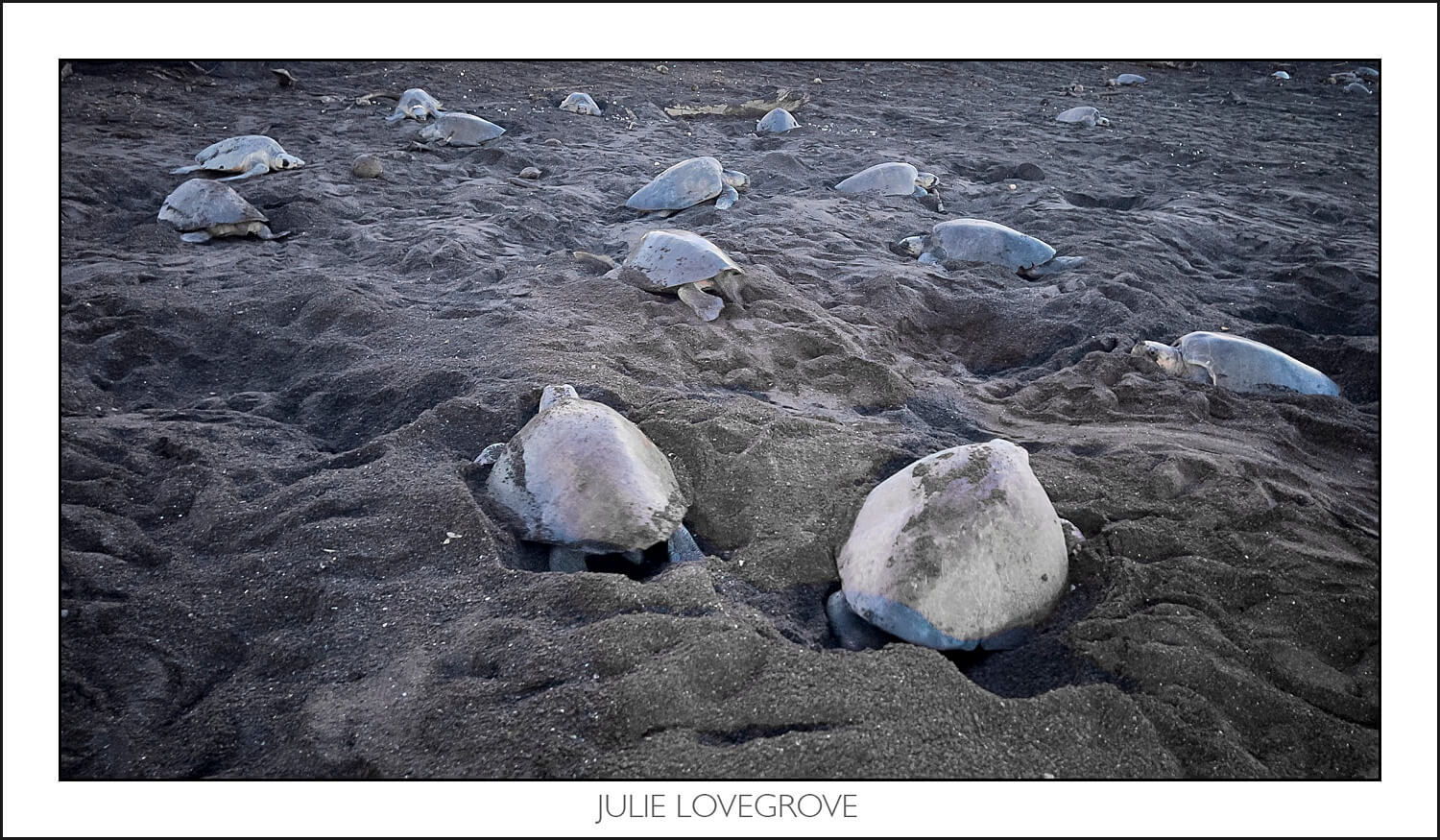
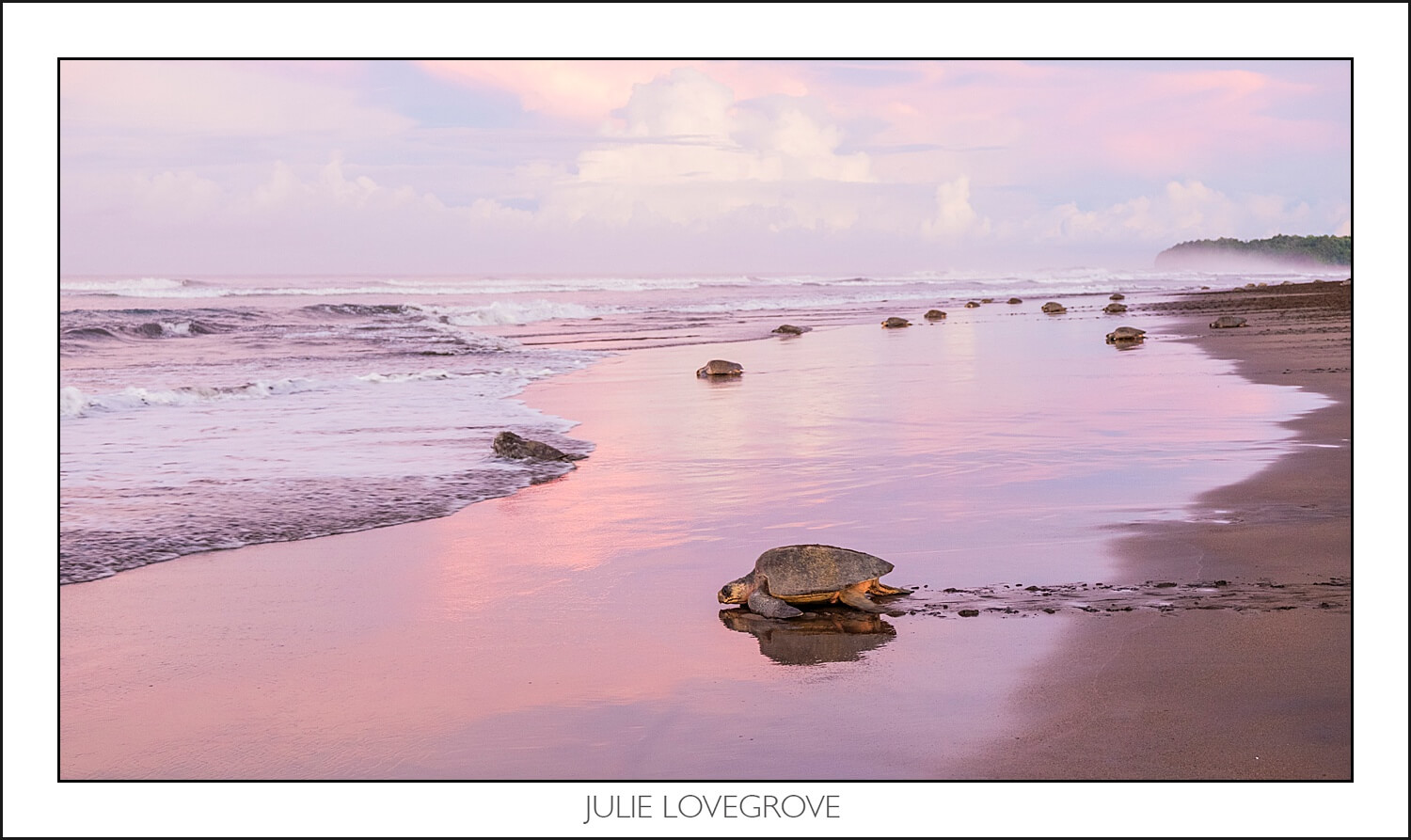
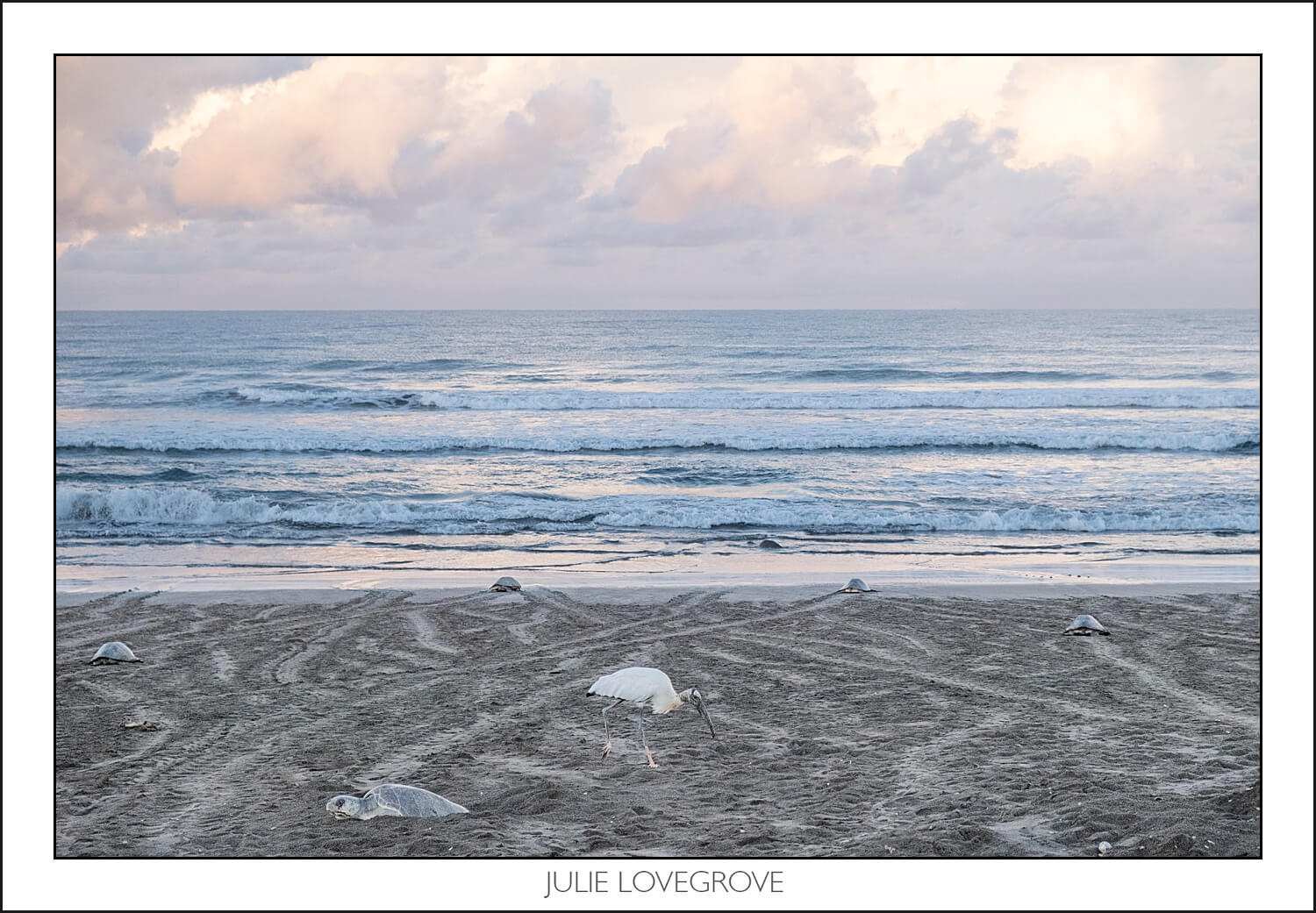
Turtles come and go all night, and when we got there many of them were returning to the sea, so whilst we didn’t see thousands, we did see hundreds.
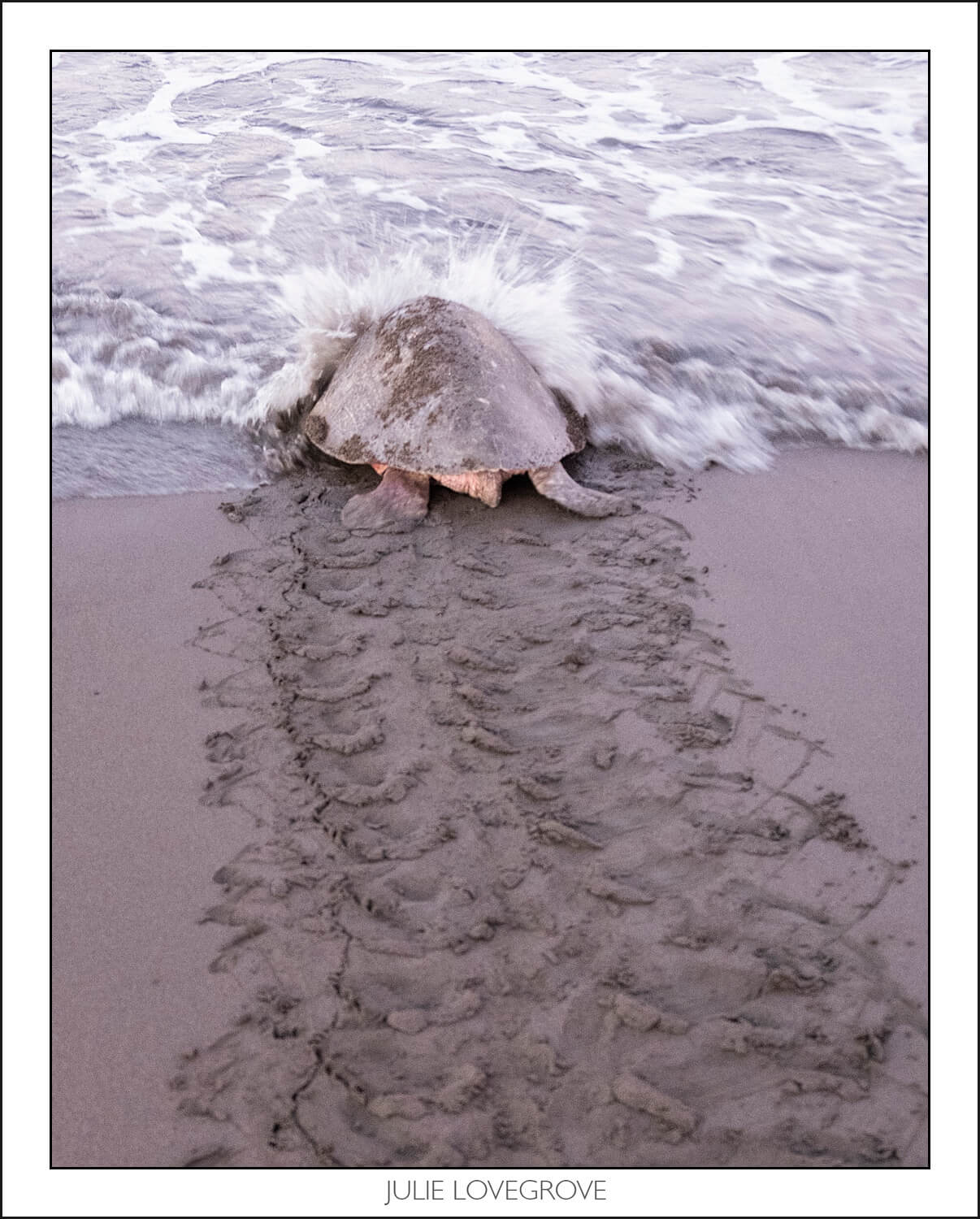
There was a beautiful sunrise that morning which cast a pink glow over everything.
The patterns in the sand from their flippers look as if a tractor has been on the beach.
Some latecomers were still laying their eggs. Because there are so many here it’s very difficult to find an area where another turtle hasn’t previously nested, and when the next one comes along it inevitably disturbs the area and ‘throws’ eggs onto the sand in the process of digging its own hole. Each turtle lays an average of 100 – 120 eggs at a time and they hatch 45-60 days later.
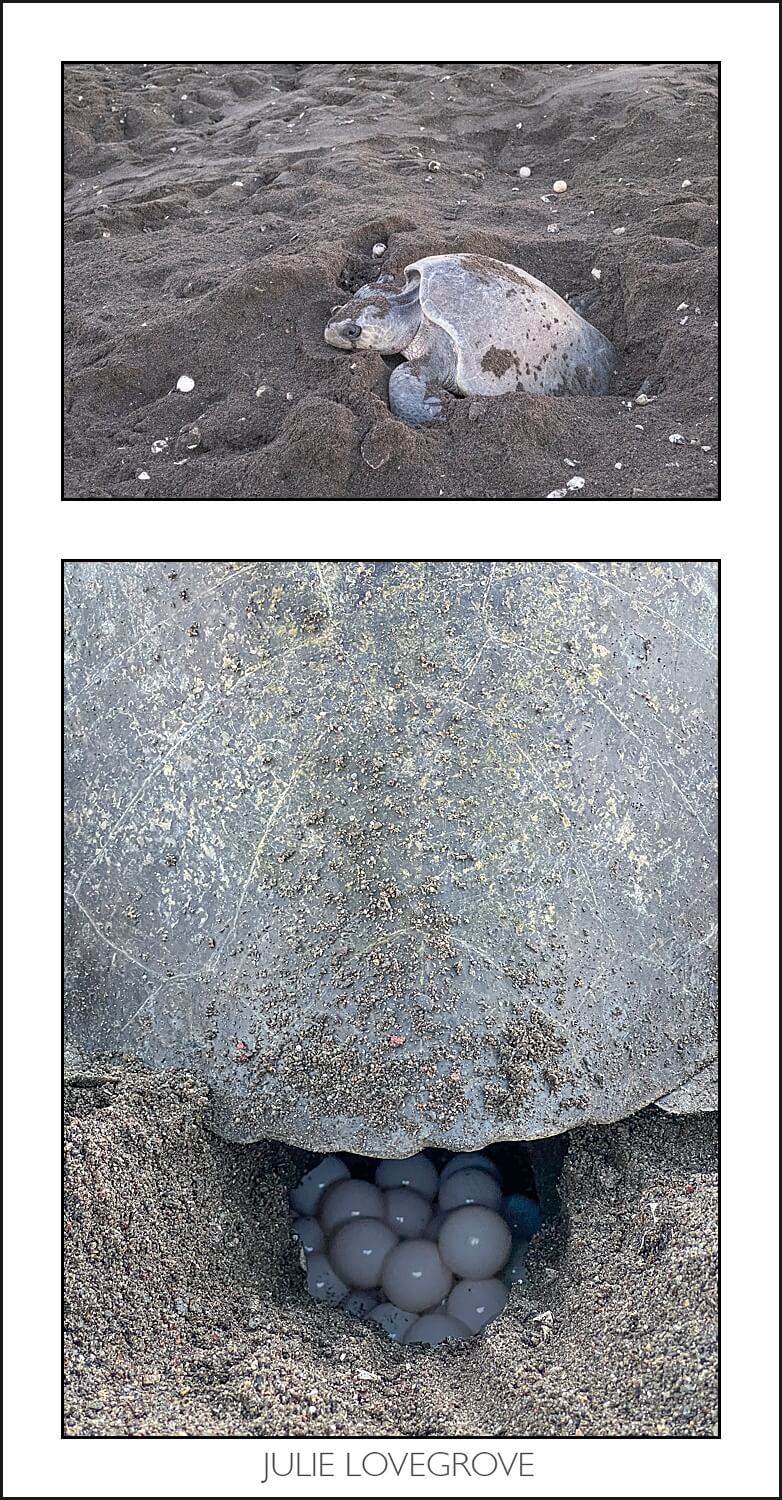
Wood-Storks patrol the beach and eat the eggs that have been brought to the surface.
After leaving the beach we went back at the hotel for breakfast, a swim, and a wander round with our cameras.
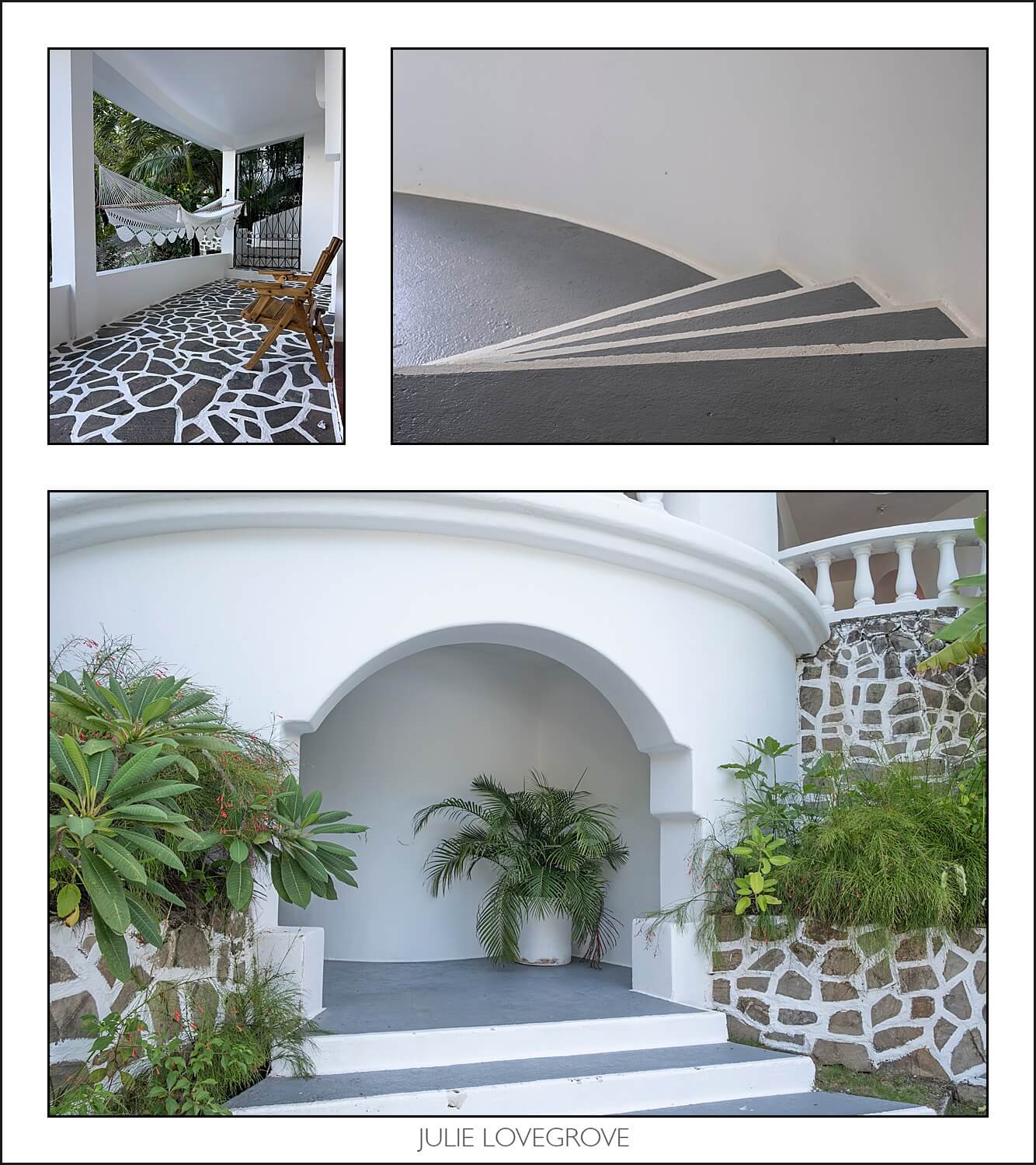
The main building of the hotel can certainly be described as ‘quirky’.
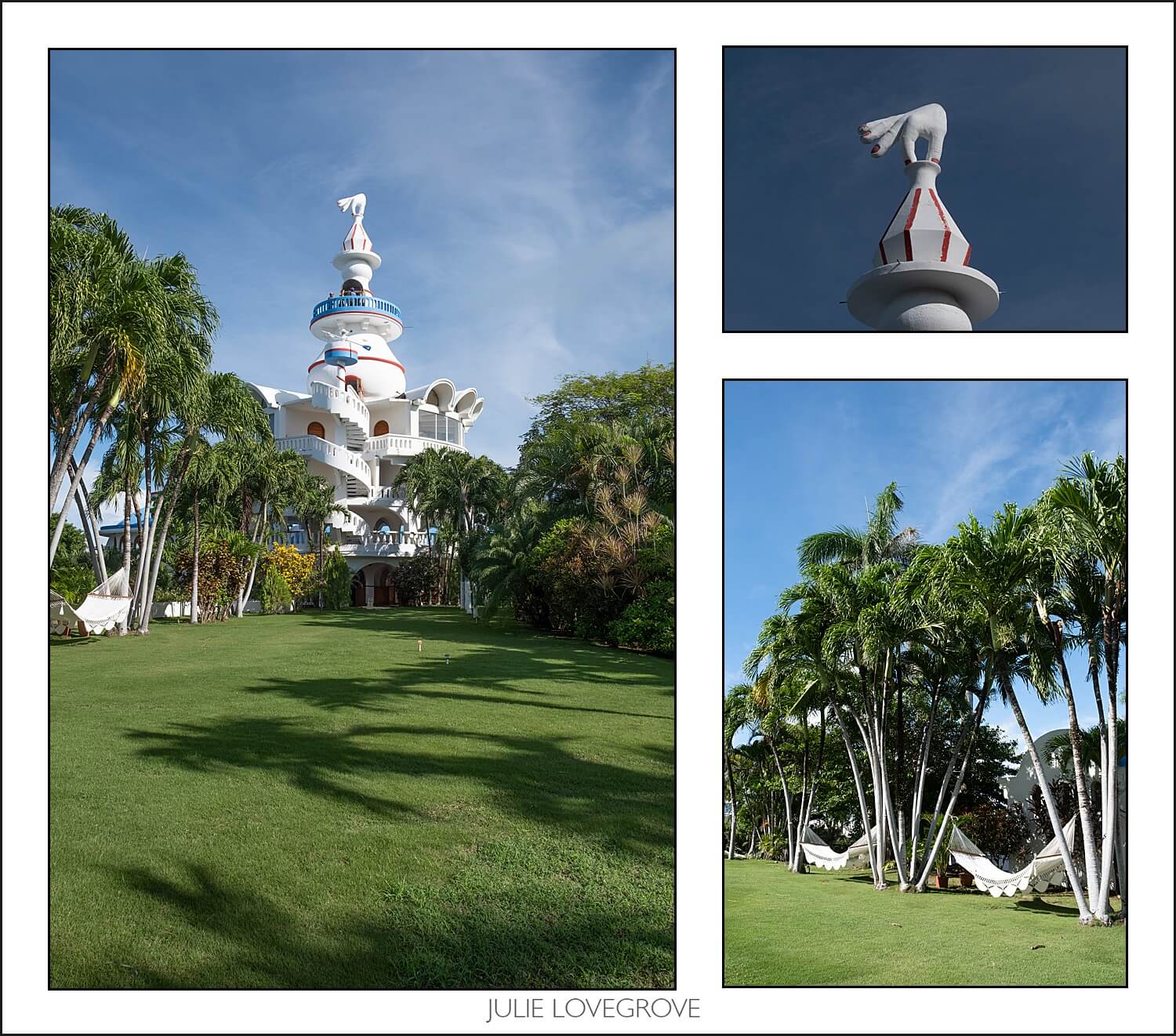
Below – The Greek influence is apparent is some of the buildings.
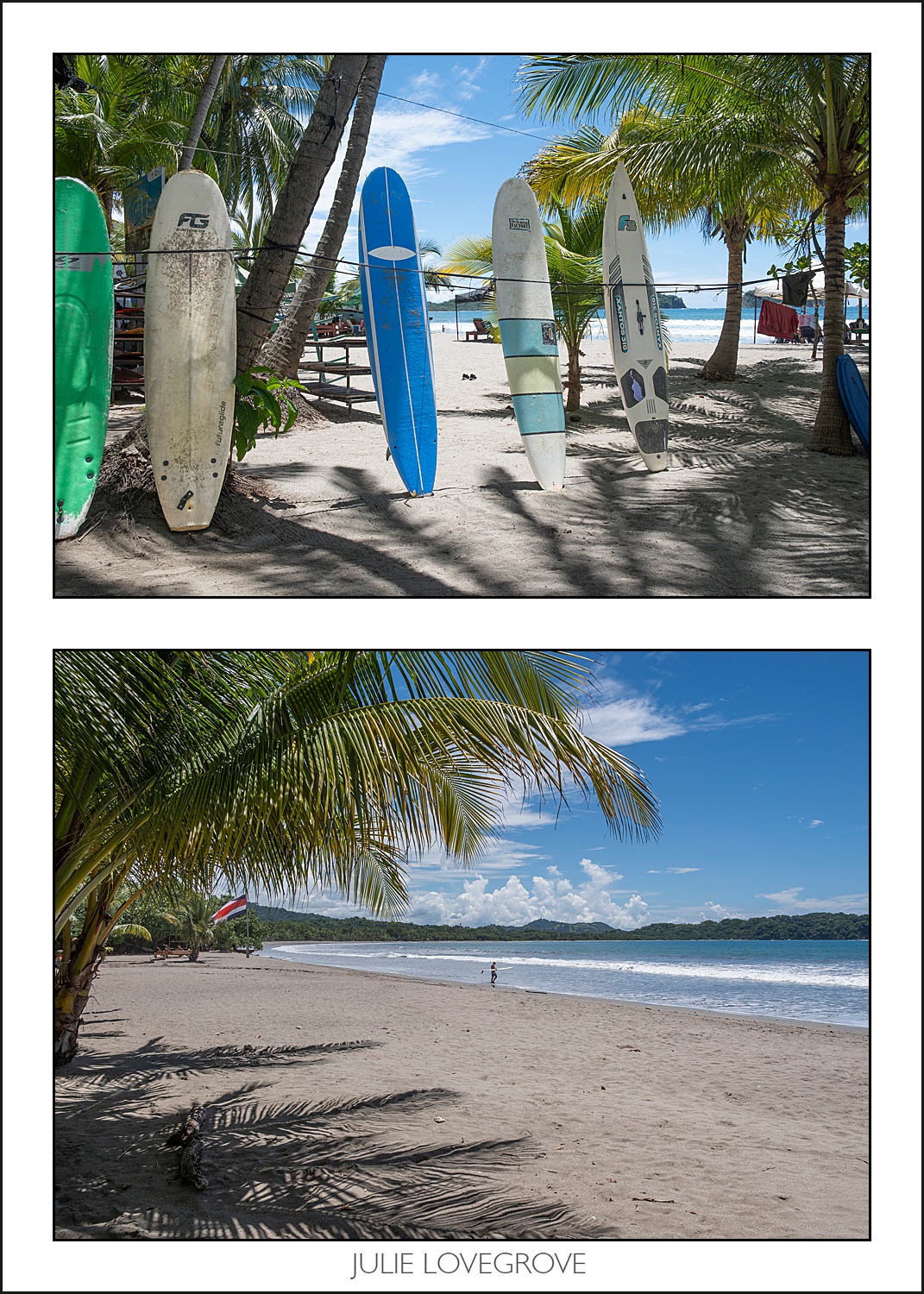
On the way home we stopped at a couple of beaches along the coast.
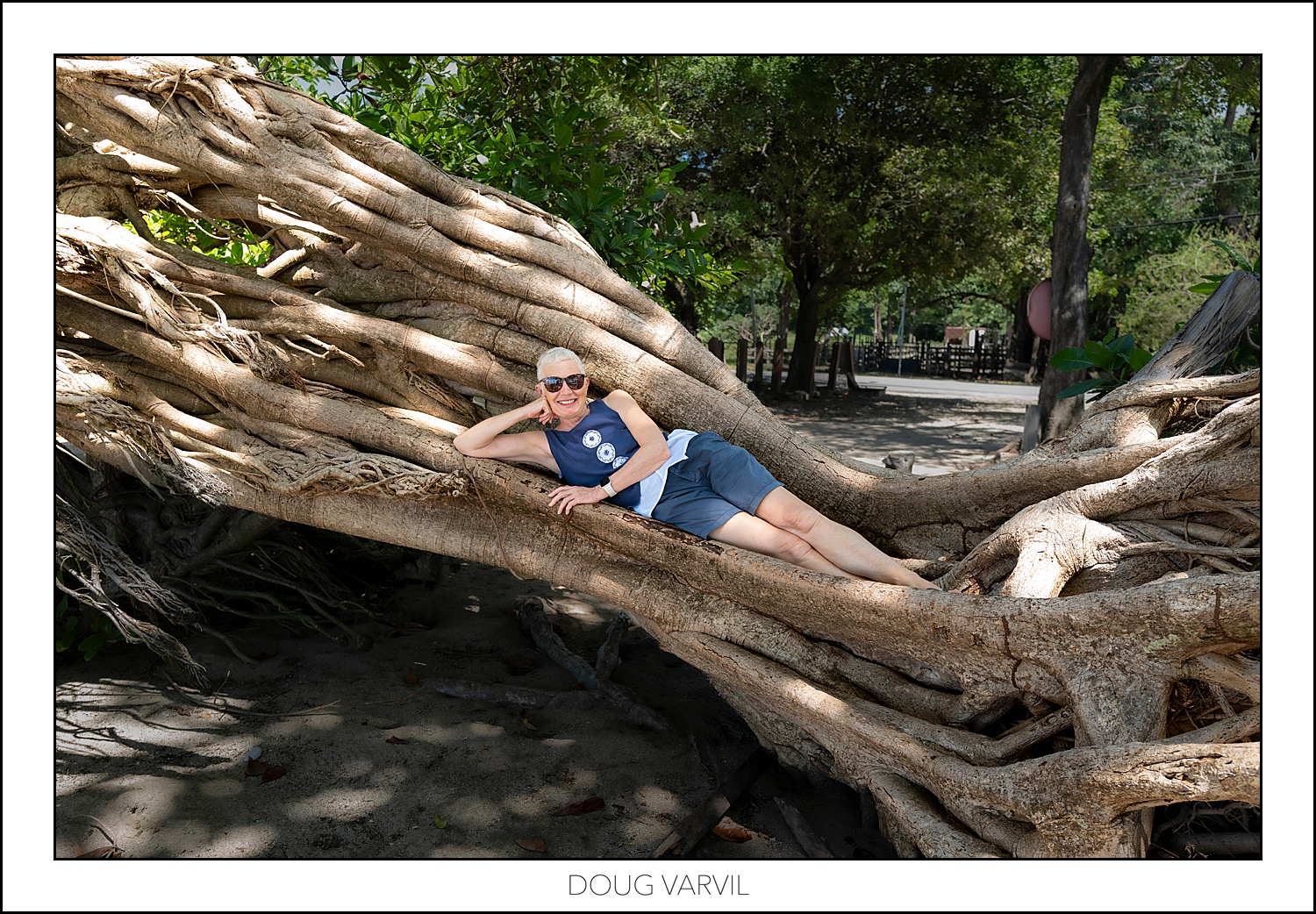
This tree on the beach looked to be completely uprooted, but somehow was still alive.