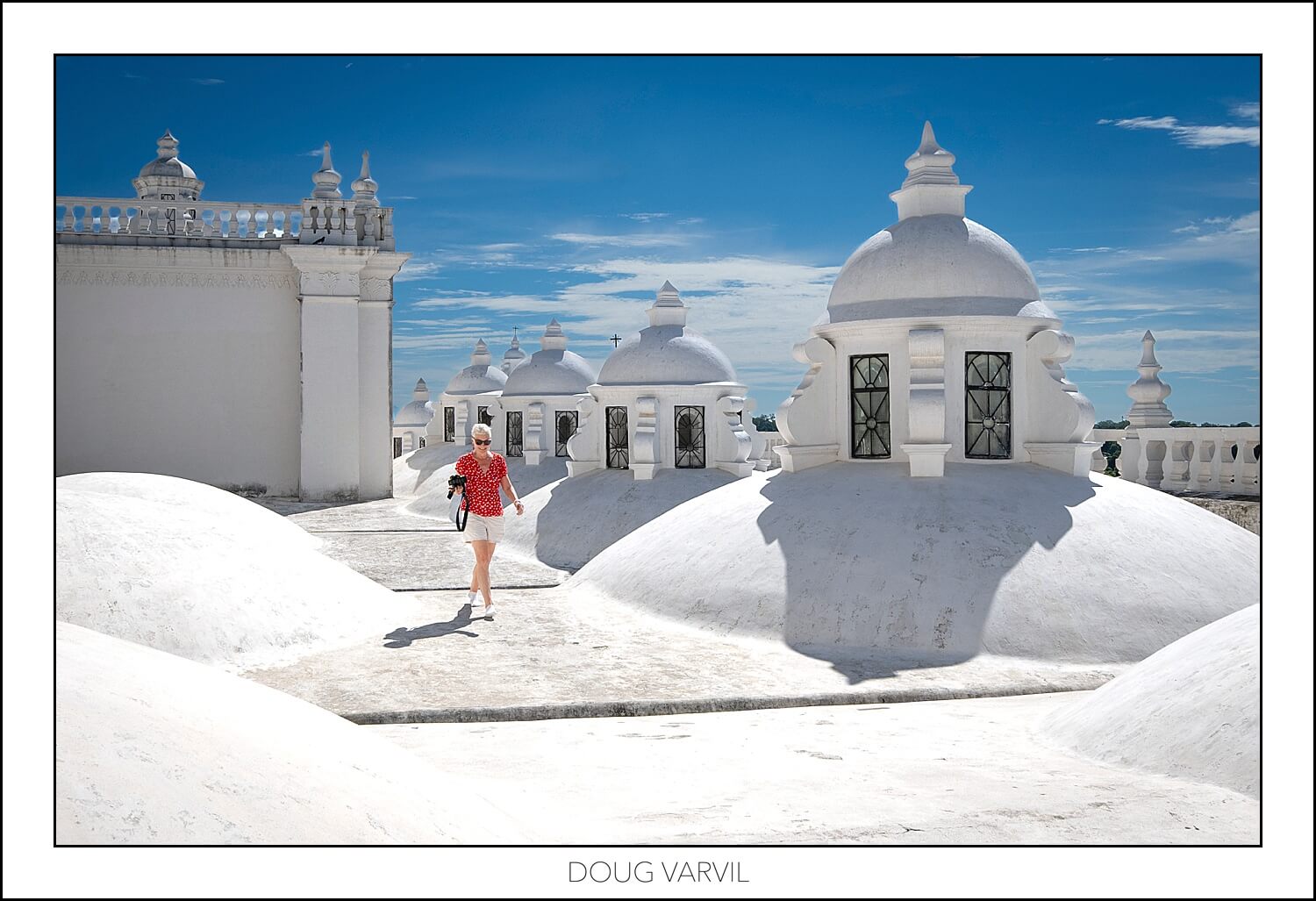
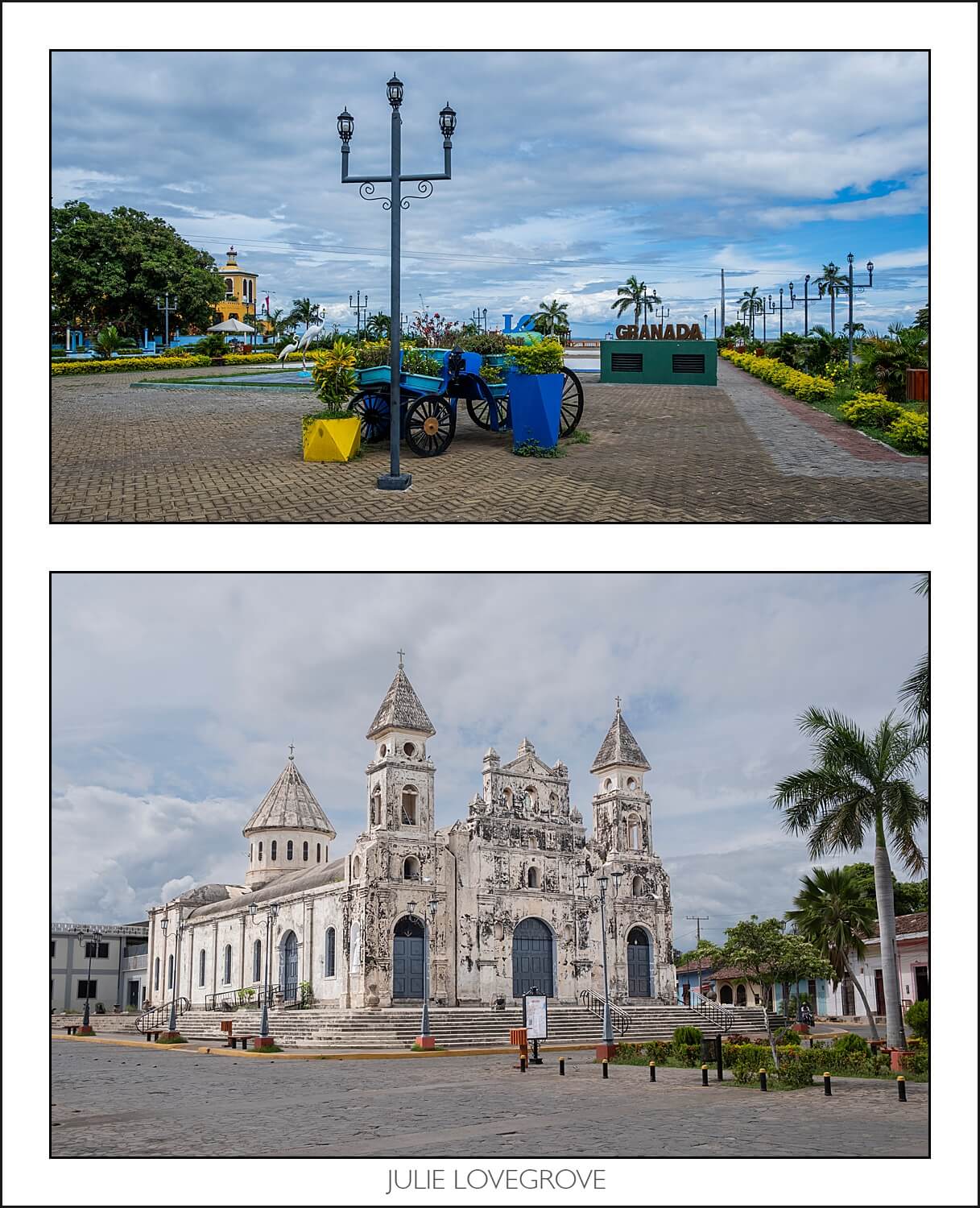
Granada.
Our second stop was in the city of Granada and our hotel was just over the road from the biggest lake I’ve seen. It was like looking out to sea as the opposite shore was too far away to be seen. We walked into the centre in the afternoon and evening but it was too hot to spend hours walking around.
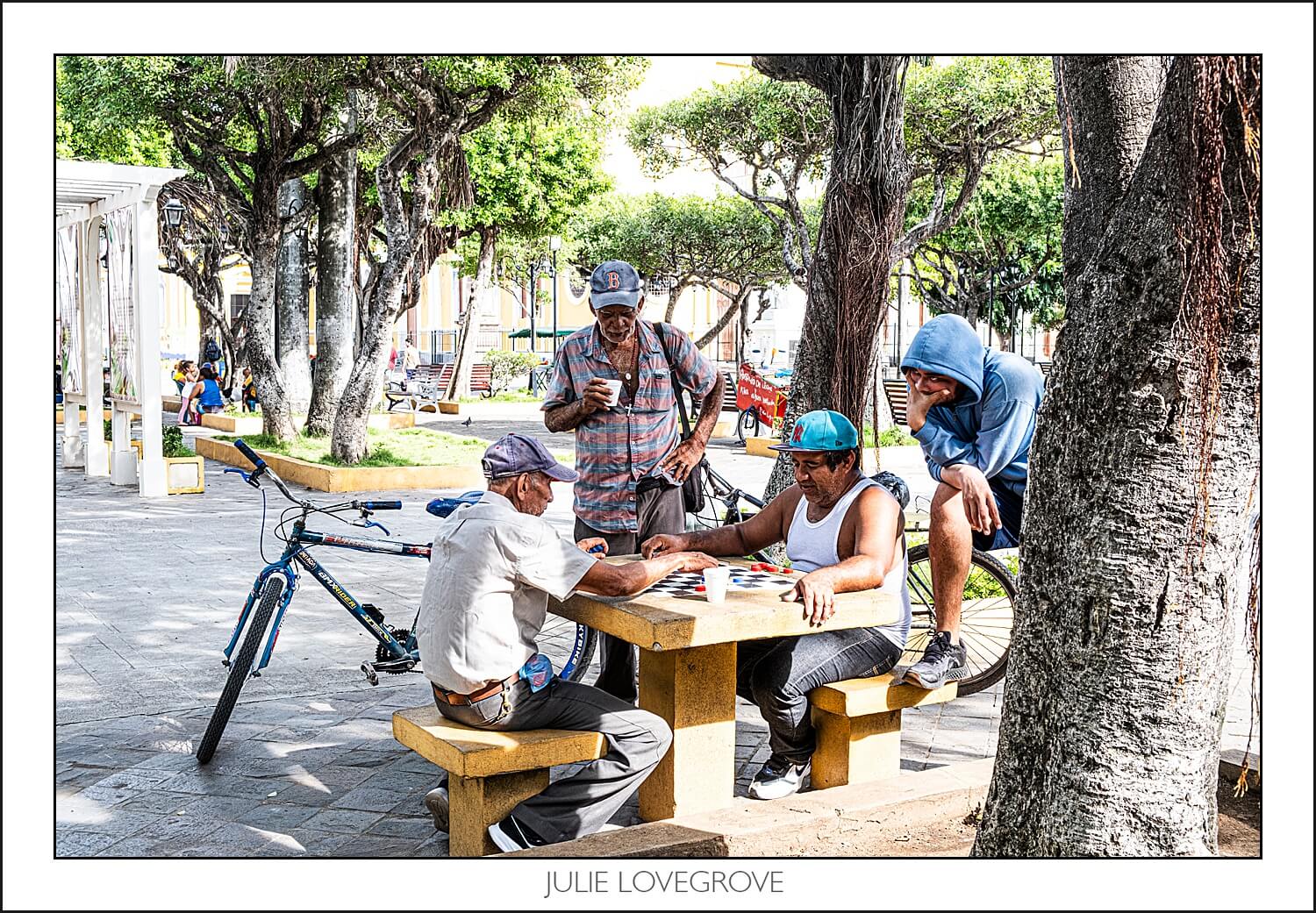
Some local men were absorbed in a game of draughts (checkers in the USA)
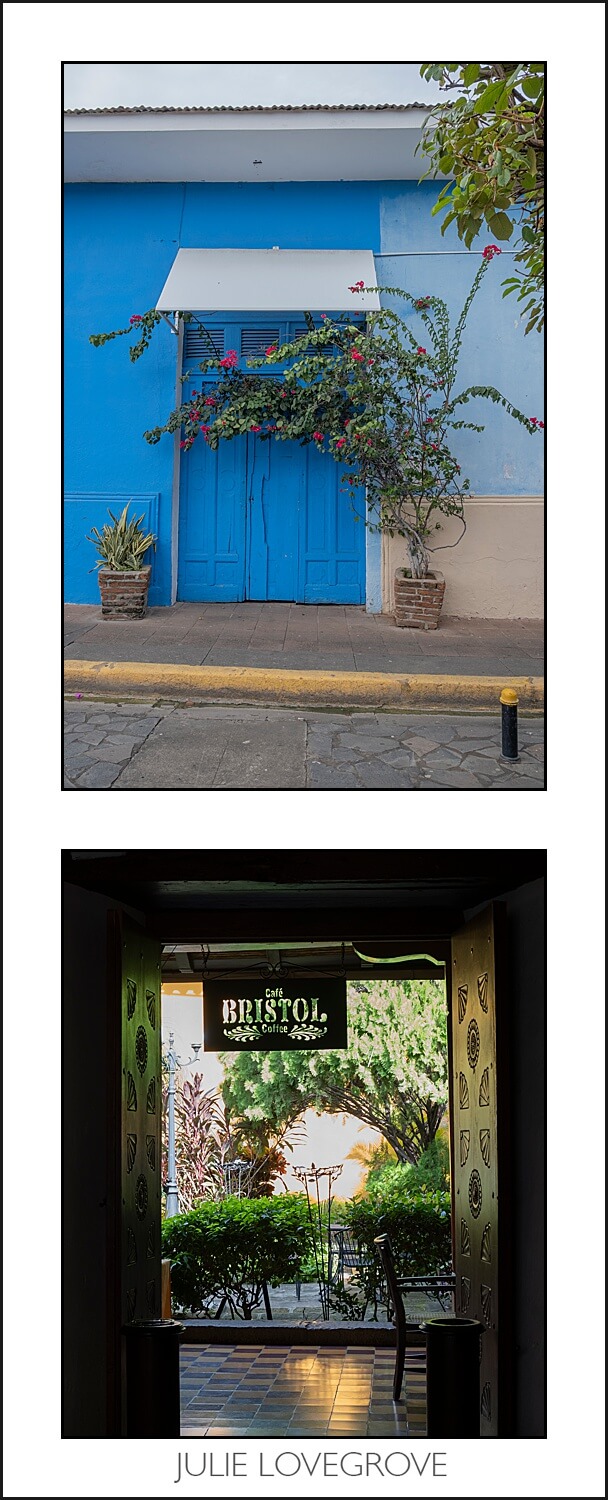
The evening temperature was much more pleasant than the searing heat of the day and we sat outside in the street to eat dinner.
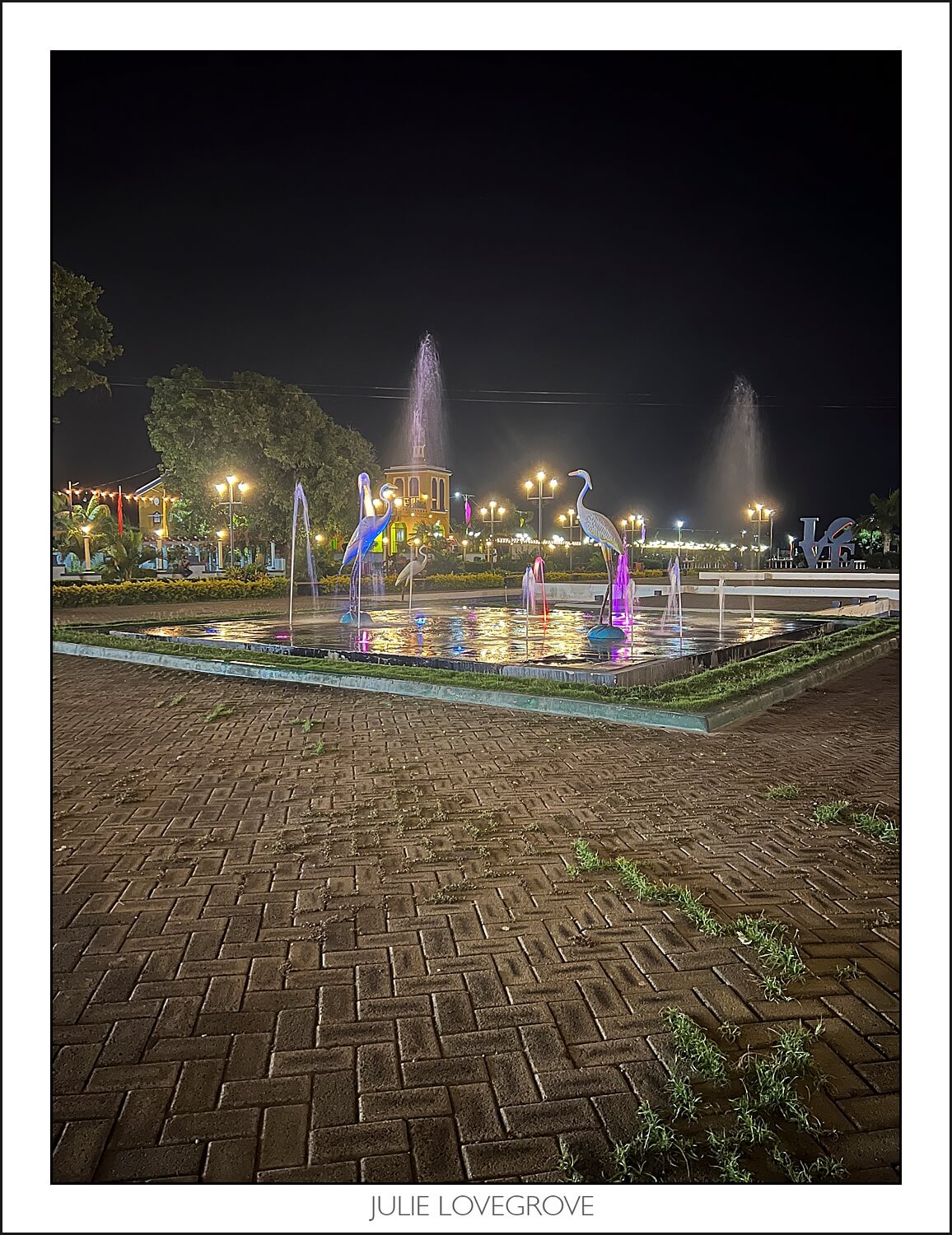
It was nice having a flat road outside the hotel for our morning run, and we didn’t expect to see horses grazing right next to the lake. During the trip we realised that the Nicaraguan people use horses for transportation of both people and goods. When they are not working they can often be seen tethered at the side of the road, constantly grazing on fresh grass. (The horses, not the people 😂) They appeared to be well looked after and in good shape. (Again, the horses and some of the people! 😂)
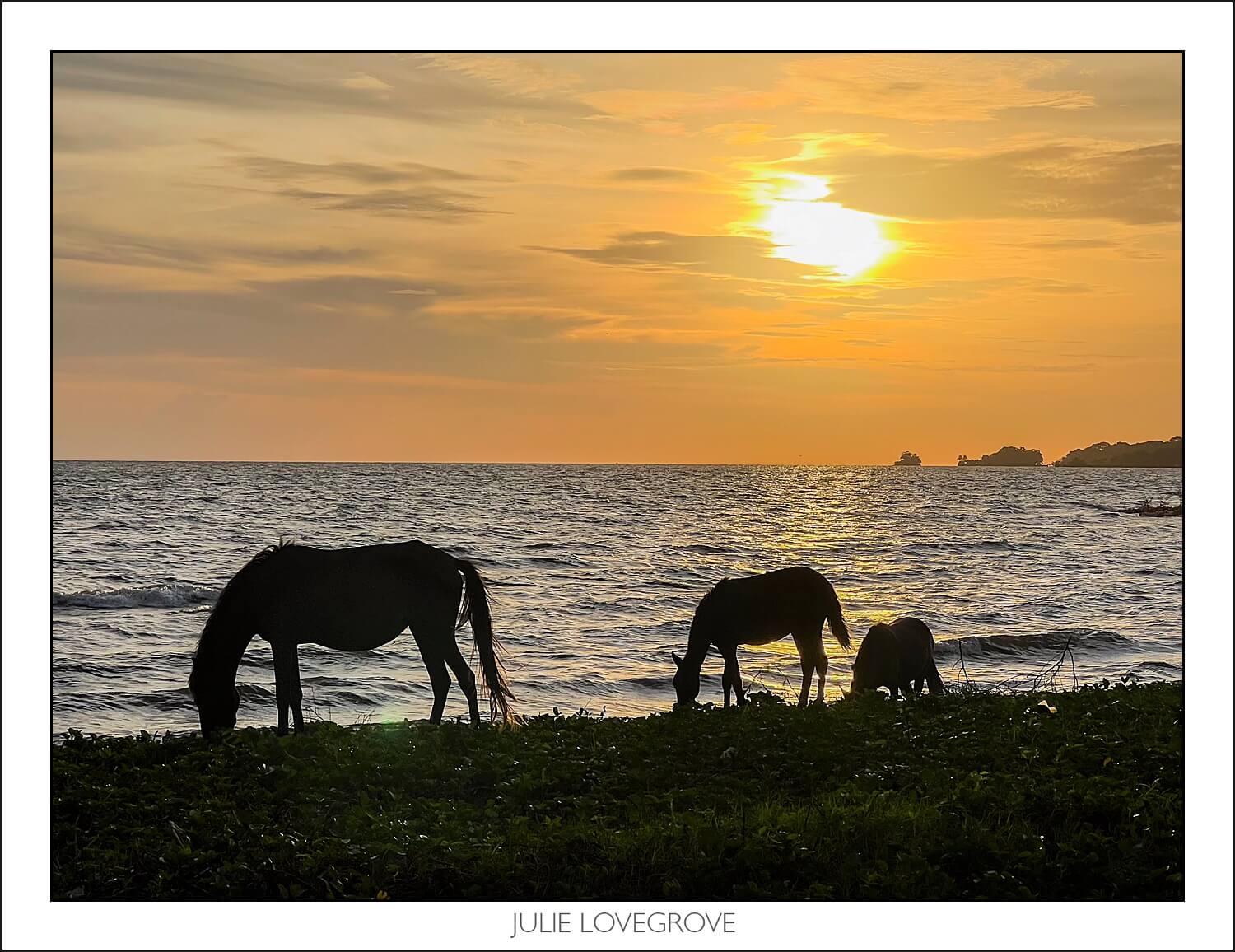
The logs seemed to be an extremely heavy load though which made me rather sad. 😢
León.
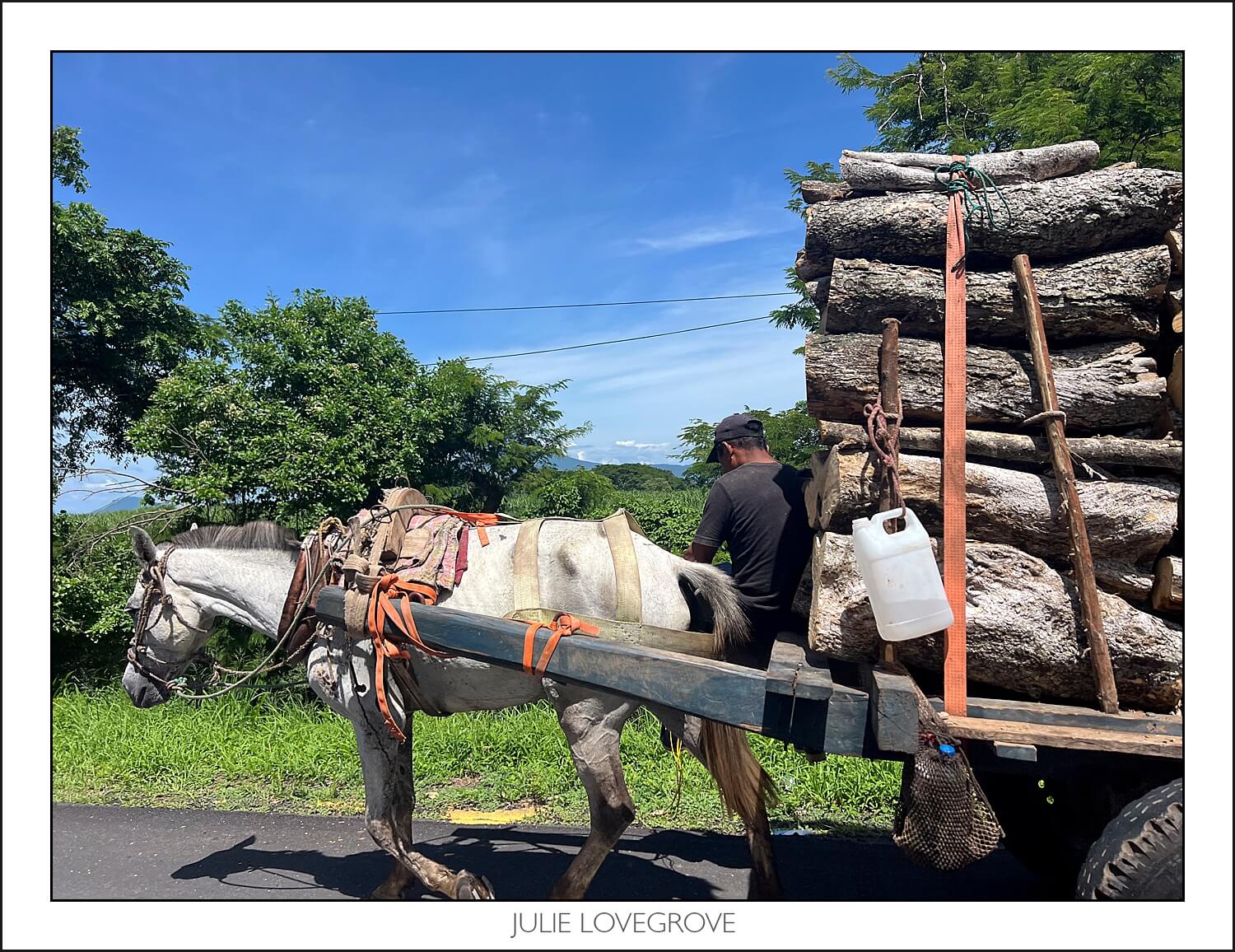
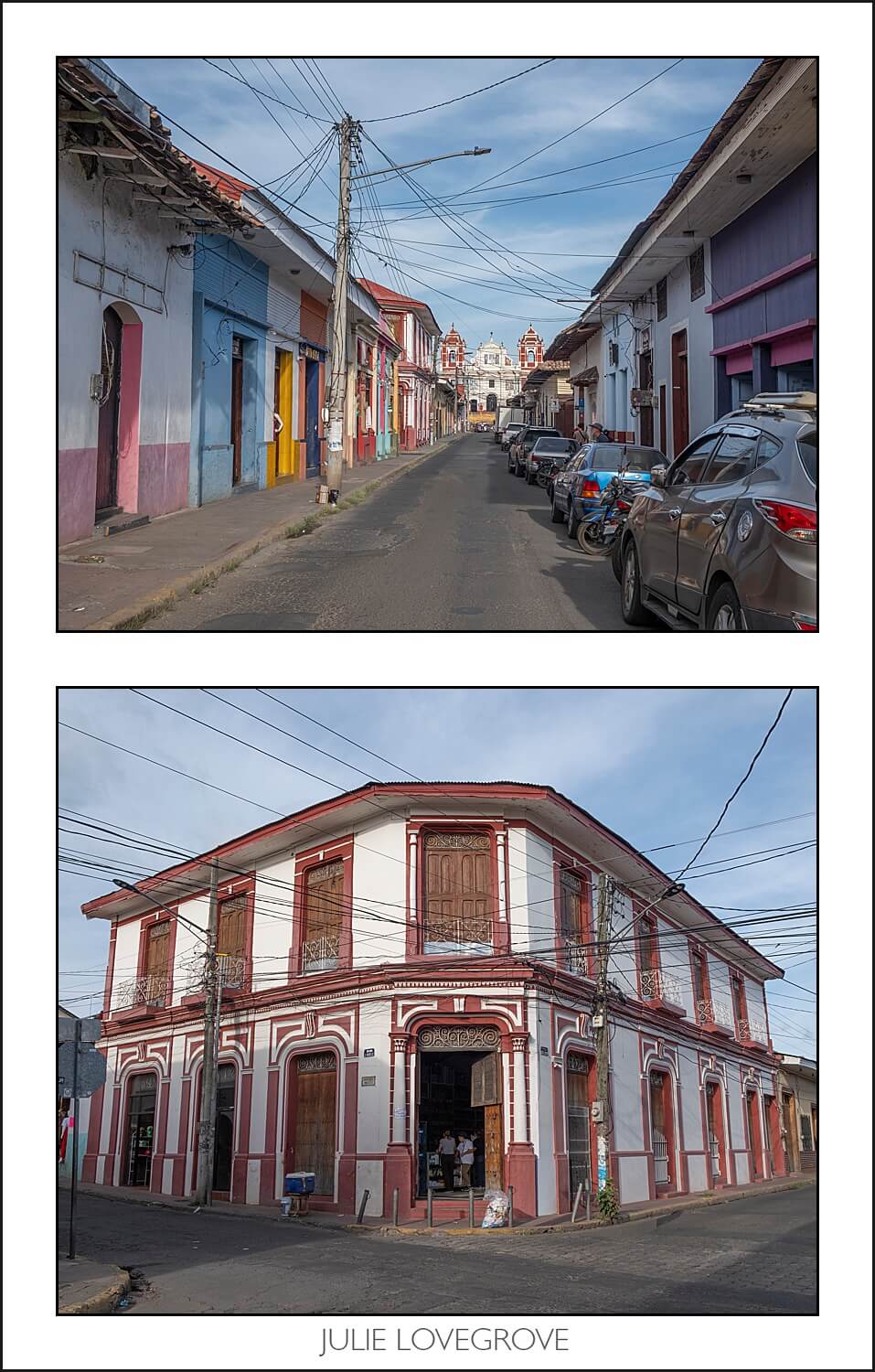
León was the furthest north on our trip and is the second largest city in Nicaragua.
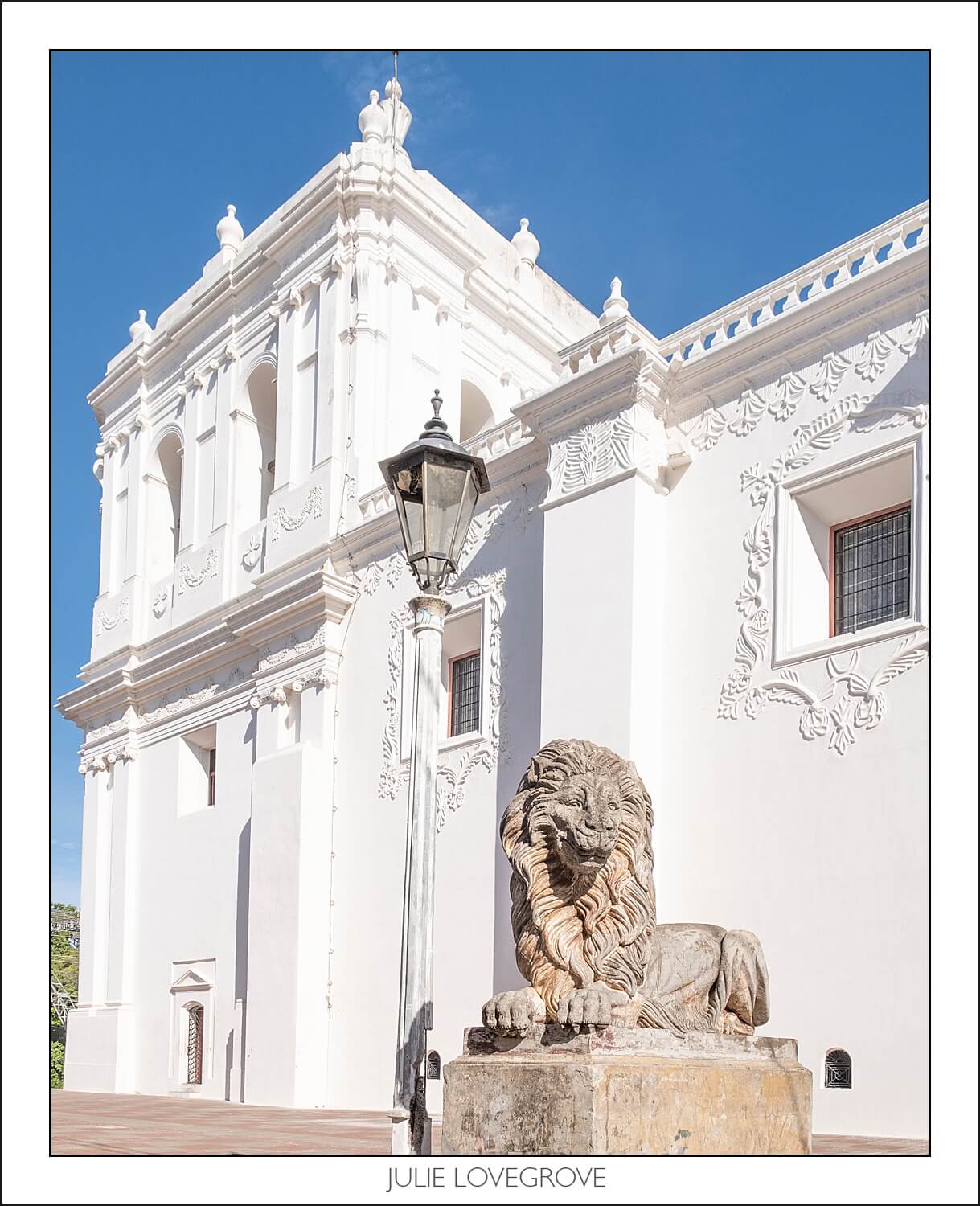
The word ‘León’ means ‘Lion’ in Spanish, and we saw quite a few statues and artwork featuring them.
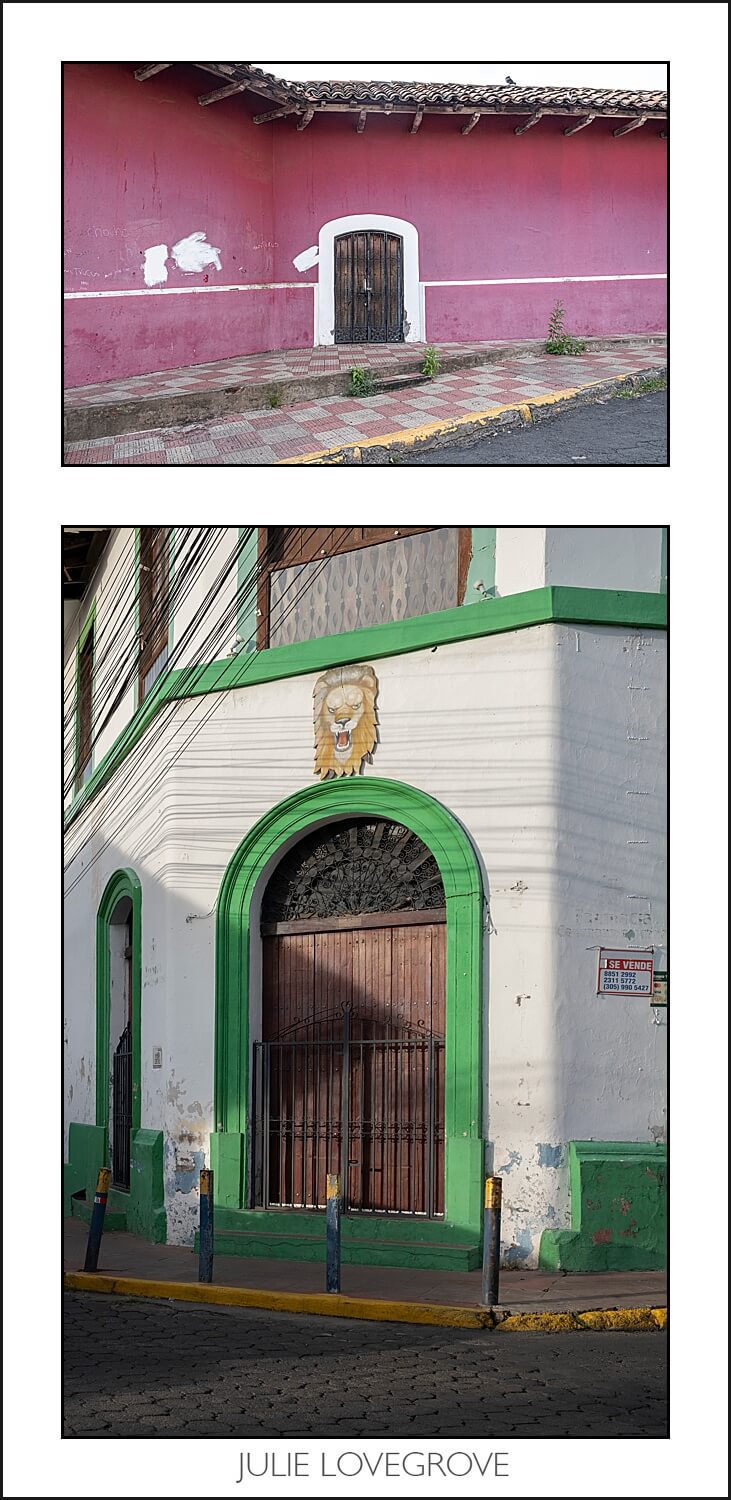
The book was part of an enormous mural on the side of a building and the lion is a rather abstract interpretation
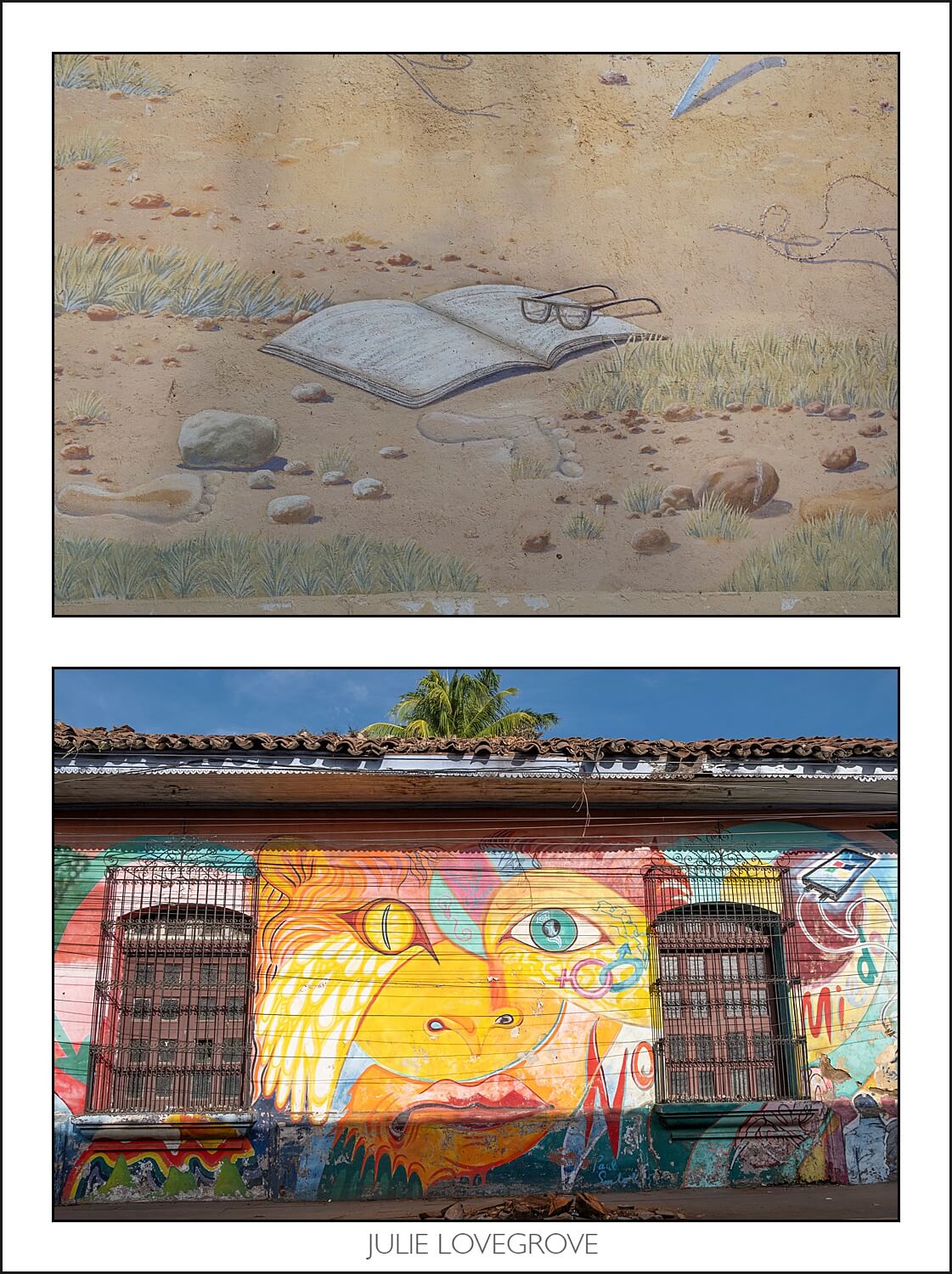
I’m always drawn to photographing doors, windows, and staircases, and my partner is a reluctant model who prefers being behind a camera instead of in front of it. He humours me when I pose him though 😂 I still enjoy the chance to be a portrait photographer again on occasion.
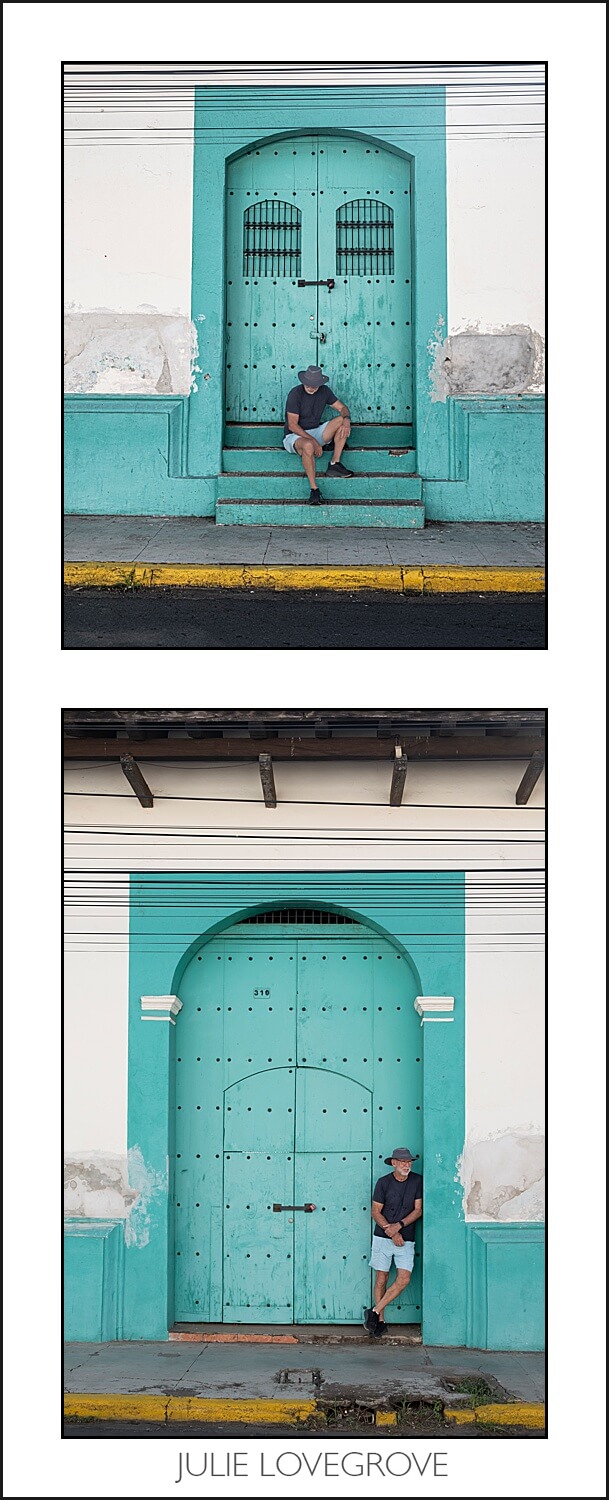
Here’s an example of him preferring to be behind the camera! He actually takes photos of me that I like 😂
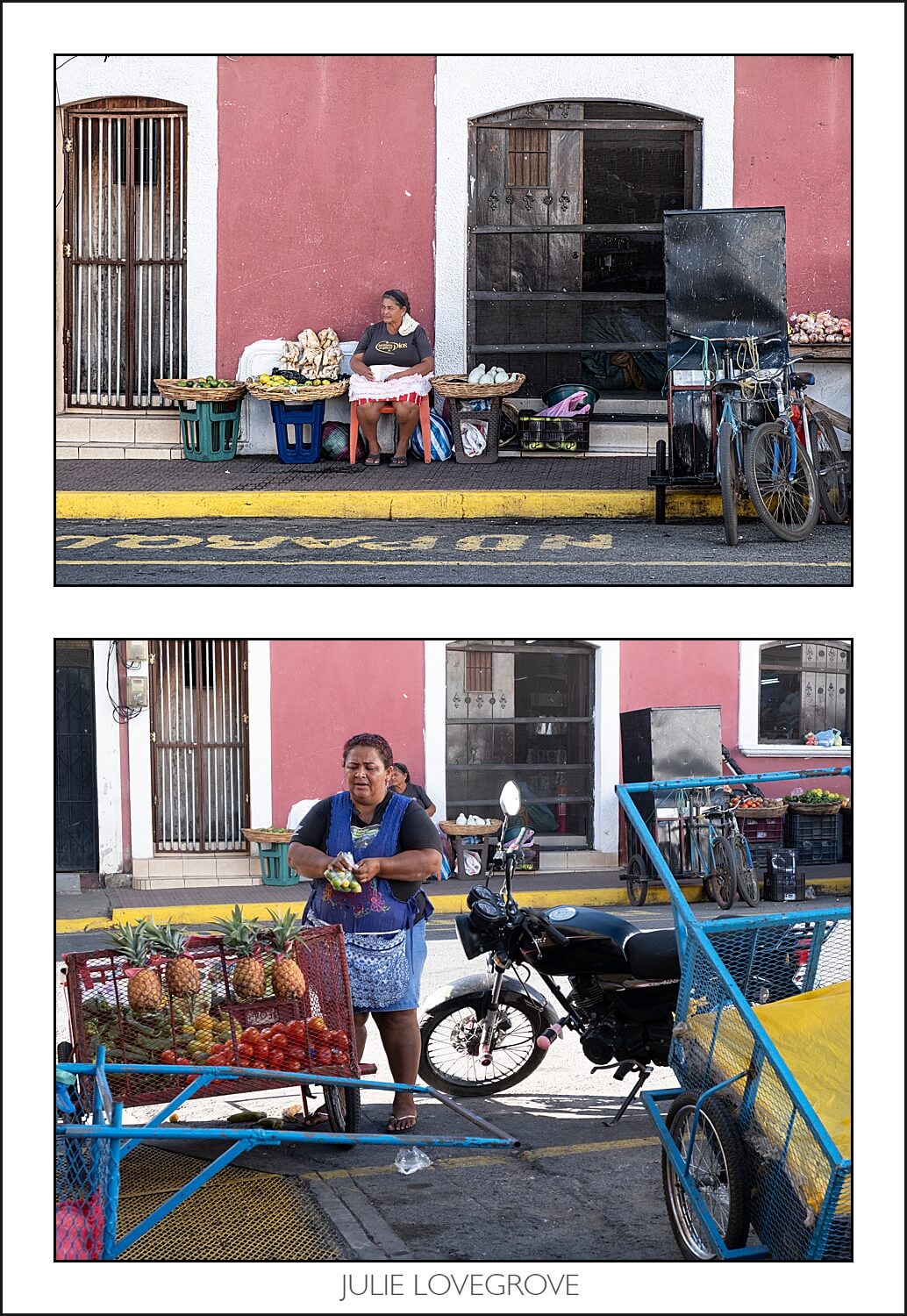
Local women sell their fruit & vegetables on the roadsides.
One of a few lions outside León cathedral.
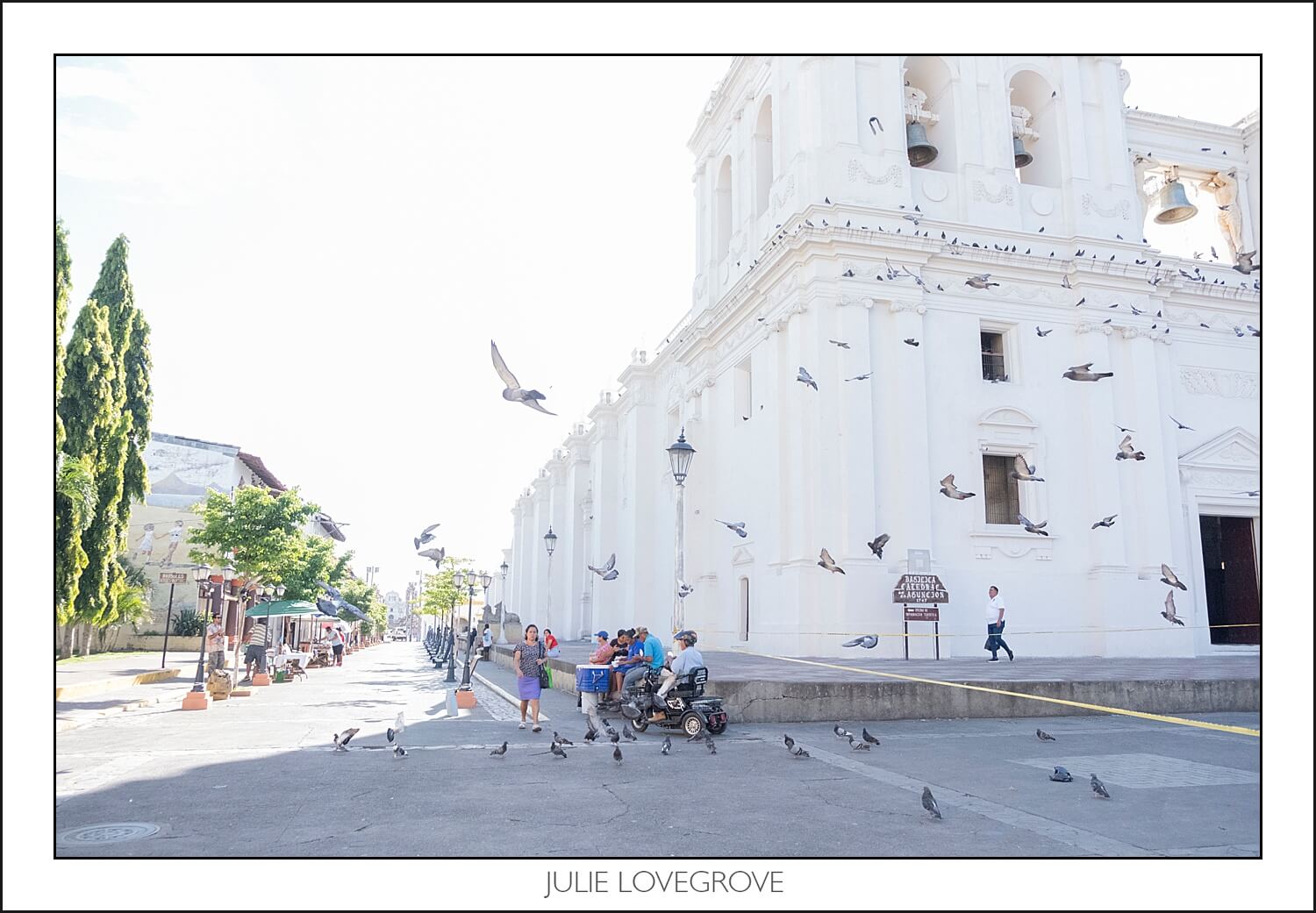
A local man sitting eating his breakfast was tossing a few morsels to the hungry pigeons.
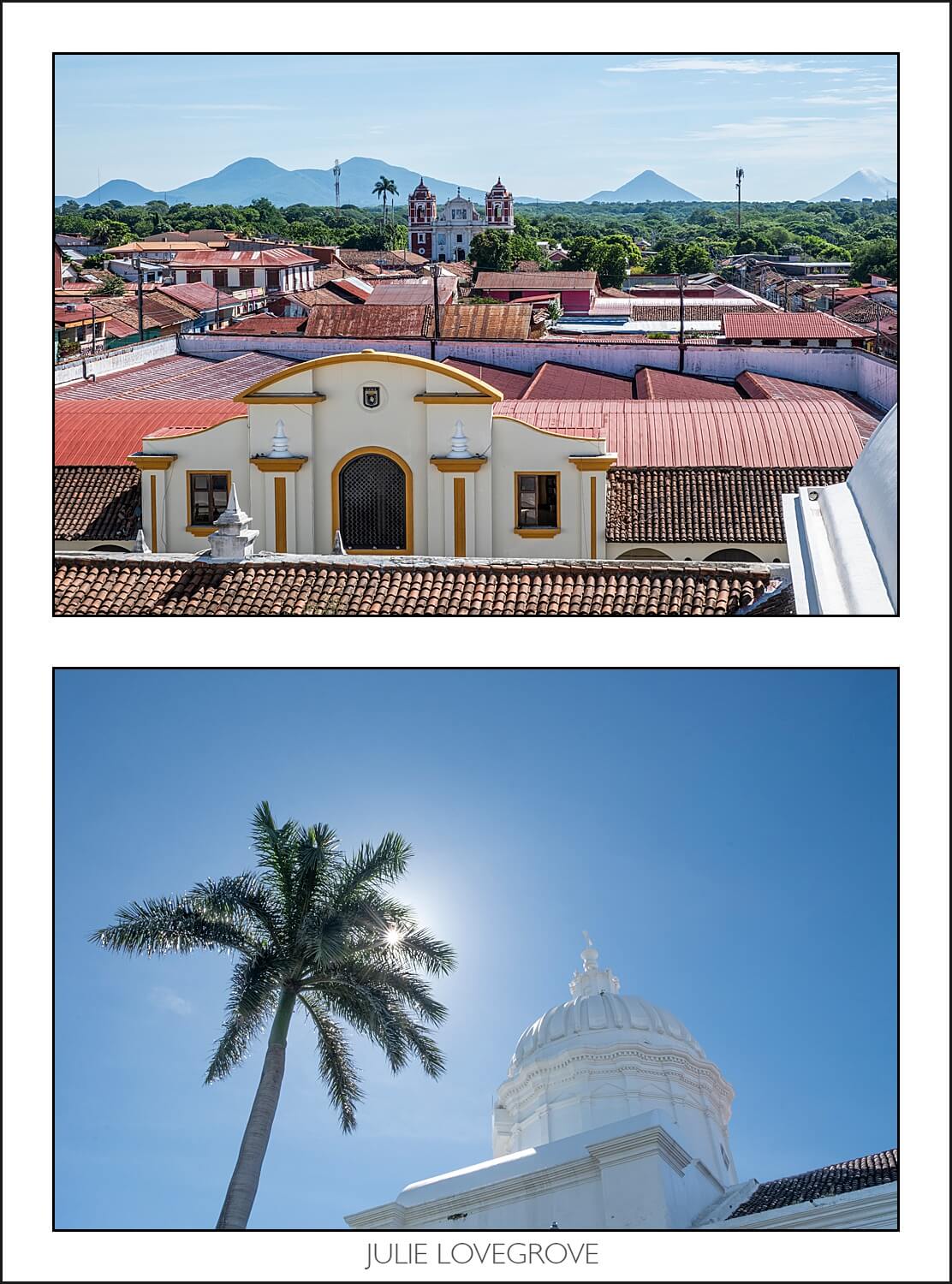
The main thing I wanted to do was to go up to the rooftop of the largest cathedral in central America. It’s an UNESCO World heritage site and for a £6/$8 fee, visitors can climb the narrow stone stairs, take their shoes off, and walk out on it. It’s an incredible sight as you emerge onto it. First visitors are allowed in at 08.30 and we wanted to be the first up there so that we could photograph it without people in our shots, and also to avoid the heat. However even at that time it was already very hot in the sun.
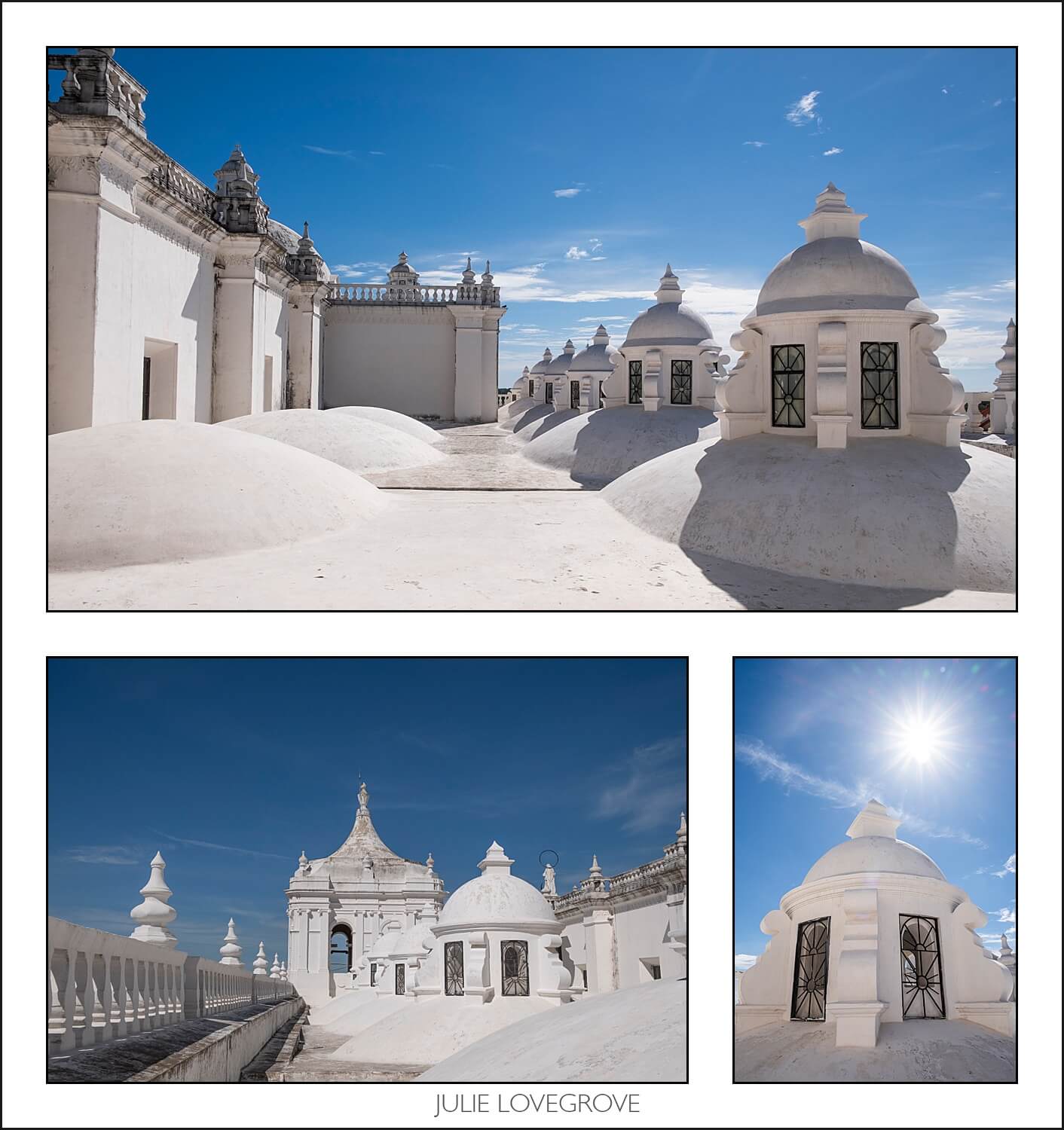
There were good views over the town and the distant volcanos.
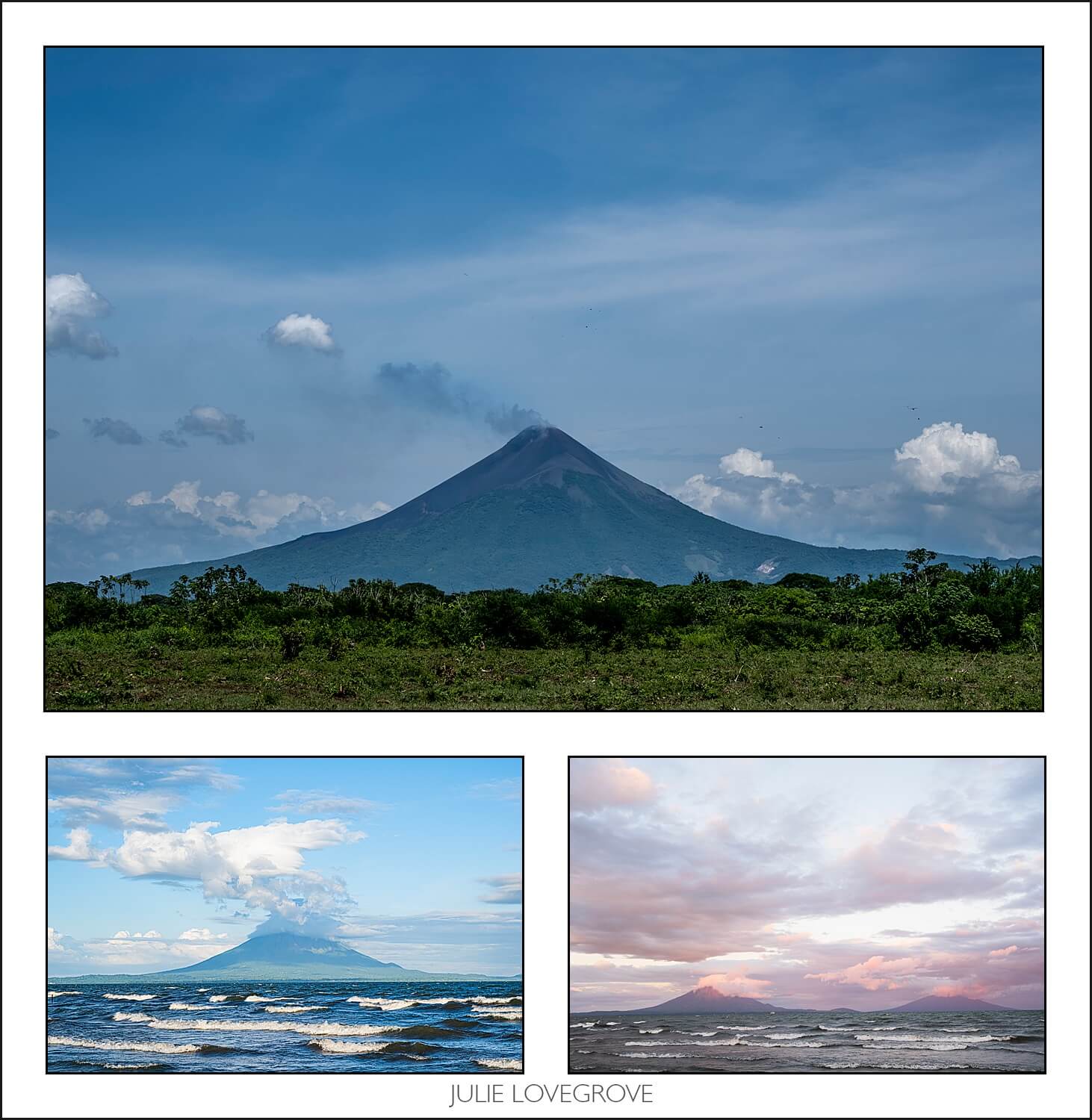
Volcanos.
Nicaragua has approximately 19 officially recognised volcanoes, and we were excited to see four of them with smoke coming out of them.
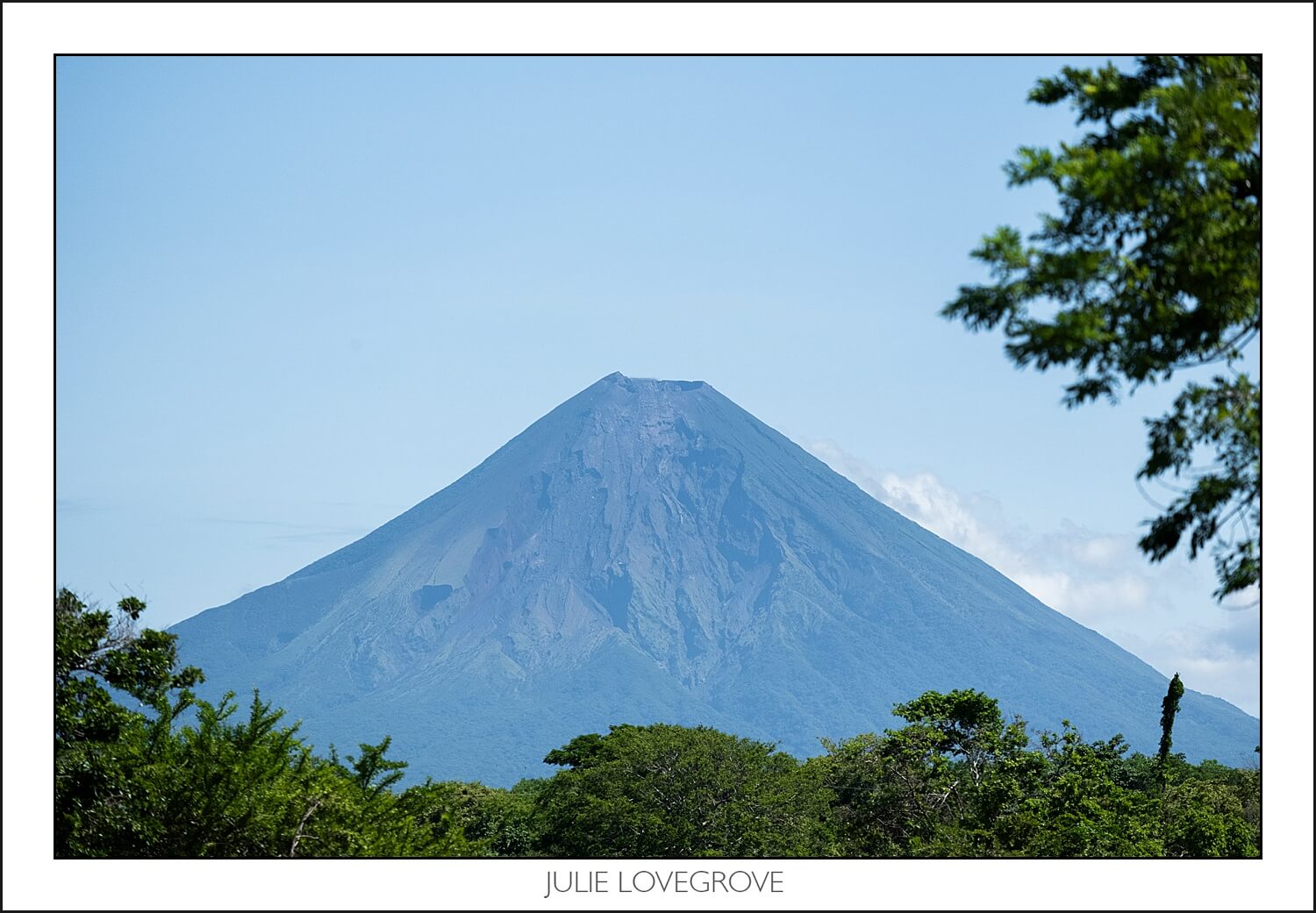
On the drive back down to the border I noticed that one volcano had a very visible crater so we pulled over at the side of the road for me to grab this shot.
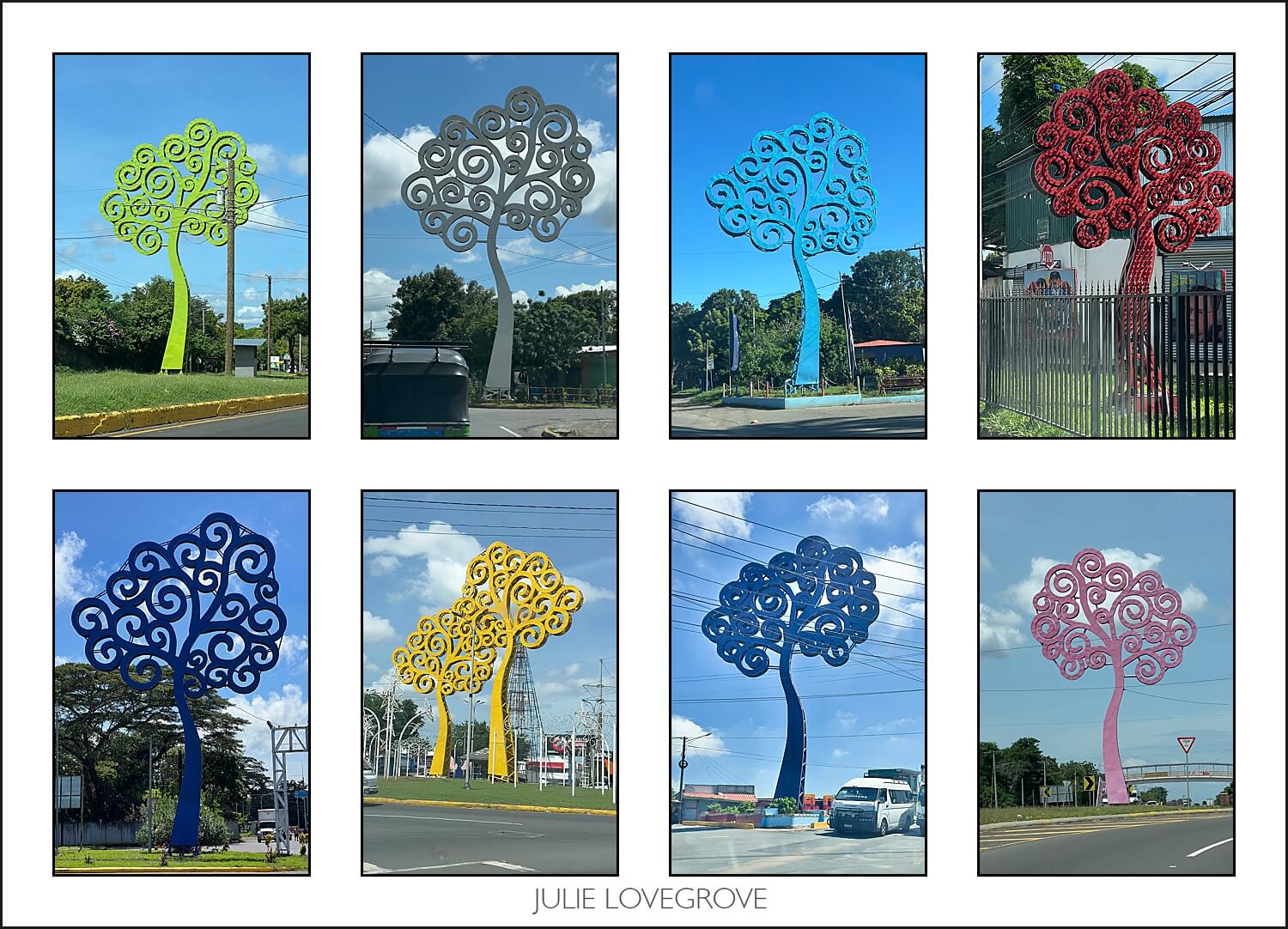
On many of the roundabouts we drove around there were enormous metal trees in various colours. Standing roughly 17 meters (56 feet) tall, they are illuminated at night by thousands of small light bulbs. They were inspired by Austrian painter Gustav Klimt’s 1909 painting The Tree of Life. The government presents them as symbols of life, light, and the Christian, socialist values of the regime, but many Nicaraguans view them as expensive, garish symbols of authoritarian power. During massive anti-government protests in 2018, demonstrators targeted and toppled or burned several of the metal structures as symbols of the regime. Despite this, new trees have continued to be reinstalled. I grabbed all the images below on my phone through the car windscreen as we drove past.
Driving in Nicaragua was easy on the main roads, but you need your wits about you in the towns as there are multiple small roads that cross each other, and we were often unsure who had right of way. Cars, bikes, motorbikes, lorries, etc would often just pull out causing a few heart stopping moments, not to mention pedestrians who casually stroll in the road. Whilst I wrote that driving on the main roads was easy, Doug had to keep a constant eye on the speedometer as the maximum speed limit is a slow 50kph, which is just over 31 mph, which feels REALLY slow. The car didn’t have cruise control and the limits are strictly enforced; we drove past many police officers with radar guns but were often ‘warned’ in advance by drivers coming towards us and flashing their lights. We managed the whole trip with no speeding tickets and no accidents – phew!
My final thoughts are that Nicaragua is a beautiful country with lovely people and definitely worth a visit if in Central America.





Wow, Julie! You make me feel as though I was there, too. I would never have thought Nicaragua would be such a gorgeous place – I can remember we studied Central and South America in school. We learned names of countries and their capitals, and very little else then moved on to the next subject, (probably none of my teachers had never been outside the USA!) Thanks.